


Introduction
Eventbrite is known internationally as an event marketplace for various kinds of events, including live events. Their website and services also allow users to browse, find, create, and promote local events. While they are known primarily for helping organisers sell tickets, they also provide comprehensive event management tools, including custom event page building, flexible ticketing and registration (free, paid, donations, reserved seating, timed entry), virtual event integrations, merchandise sales, and built-in marketing and advertising features for bands, among others. In this article, you will gain a full understanding of how Eventbrite’s pricing works. We would show you what you should expect to pay for their services, including hidden costs not stated on their website or app. At the end, you will have enough information to decide whether Eventbrite is the right event service provider for you, and to consider other worthy alternatives.
How much does Eventbrite cost?
Eventbrite offers free packages for its services; for instance, with ticketing, it does not charge a fee for hosting free events. However, for paid events, it charges a high fee. The burden of these fees could be shared between attendees and organisers, or borne only by the organisers, depending on the organiser's preference. Eventify operates a per-ticket pricing model.
Eventbrite also offers add-on services, such as advertising and marketing. It costs $5 to $25 to run ads and $15 to $100 for organisers to send daily marketing emails to reach more people.
Eventify: An Alternative
Eventify is an all-in-one event management and marketing platform that helps organisers plan, promote, and run events, from registration and ticketing to networking, attendee engagement, and analytics, all in one place. It is designed for organisers who want seamless control over in-person, virtual, or hybrid events, offering tools like branded event apps, push notifications, email campaigns, and gamification to boost engagement. Its pricing is fair and transparent, with flexible plans tailored to different needs, clear monthly or annual options, and competitive value relative to the features included.
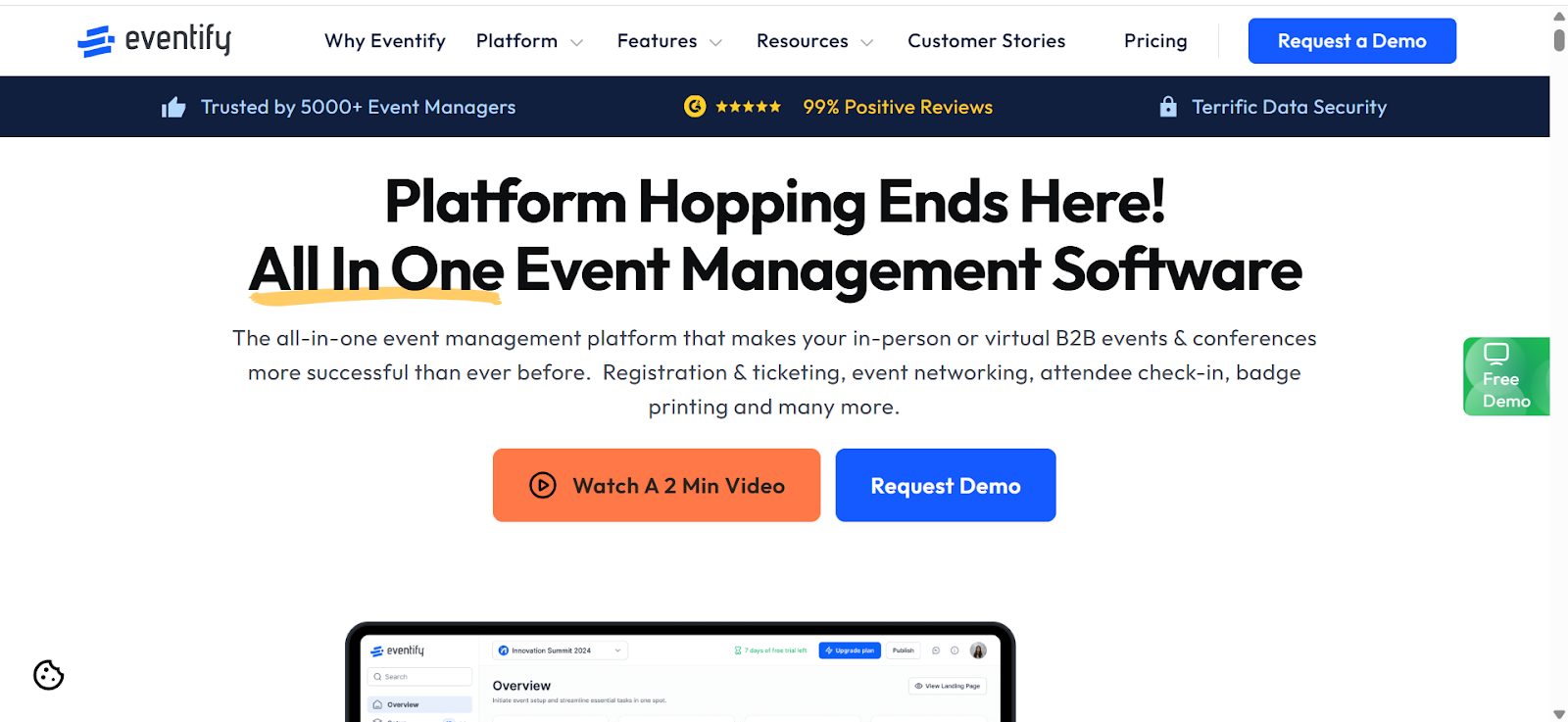
What makes Eventify stand out?
- No per-attendee percentage fees: Unlike some competitors that take a cut of ticket revenue or scale costs with attendance, Eventify’s model avoids per-ticket hidden charges on paid plans, making budgeting easier.
- Generally more cost-efficient than rivals: While they might not have the same structure of pricing, compared with other rivals, including Eventbrite, Eventify’s pricing is much more cost-efficient and noticeably cheaper for similar features.
- Predictable flat pricing tiers: Eventify lists its plans clearly with fixed monthly or per-event costs, so you know what you’ll pay without surprise add-ons if you upgrade features
Below is a table containing how Eventify’s pricing works;
Eventbrite Pricing Plans: A Breakdown
Eventbrite combines ticketing, marketing, and promotional tools in its platform. Costs vary depending on whether events are free or paid, and optional services like email marketing and event ads are available for additional promotion.
1. Ticketing

Eventbrite’s ticketing system allows organisers to create and manage both free and paid events efficiently. Free events can be published and promoted at no cost, making it ideal for workshops, community events, or non-profit gatherings. For paid events, Eventbrite handles secure online payments, providing a seamless checkout experience for attendees. The platform charges a service fee of 3.7% of the ticket price plus a fixed $1.79 per ticket, alongside a 2.9% payment processing fee per order. Organisers can choose whether to absorb these fees into the ticket price or pass them on to attendees, offering flexibility in budgeting. Eventbrite also provides robust reporting and analytics, allowing organisers to track ticket sales, monitor revenue, and understand attendance patterns. Its platform is scalable, supporting small gatherings as well as large-scale events, and the straightforward fee structure ensures transparency, helping organisers plan financially without unexpected charges. Eventbrite’s service fees, along with payment processing and other charges, vary by country to ensure local compliance and currency adjustments.
2. Email Marketing
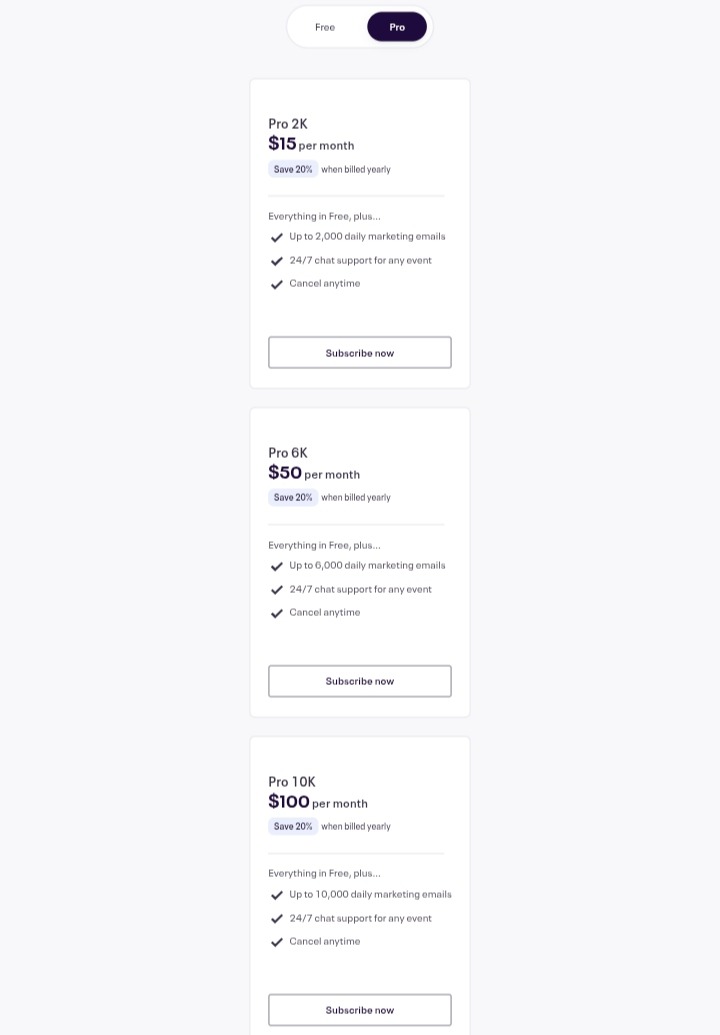
Eventbrite offers organisers powerful marketing tools to reach and engage attendees. Through email campaigns, organisers can send targeted messages, reminders, and updates, using audience segmentation to personalise communication. Automated messaging ensures timely notifications for registrations, event updates, and follow-ups. Analytics track open rates, clicks, and conversions, helping organisers refine their campaigns. Daily sending limits vary by subscription tier, with Pro plans offering higher limits, making email marketing scalable, efficient, and tailored to event needs.
3. Eventbrite Ads

Eventbrite Ads are an optional paid feature that boosts event visibility and ticket sales. Organisers set a daily budget, which determines the total monthly cost, billed at the end of each month. Budgets can start as low as $2–$5 per day, with a recommended minimum of $5/day ($150/month) for meaningful reach. Larger campaigns may require $10–$20/day, depending on event size. Ads provide prominent placement across Eventbrite’s listings and mobile app, social media promotion, and real-time reporting on impressions, clicks, and registrations. Ad spend is separate from ticketing or platform fees, giving organisers full control over costs while increasing exposure and engagement.
4. Eventbrite Hidden Costs
While Eventbrite lists its main ticketing fees publicly, there are several hidden or additional costs that organisers should be aware of. These fees can reduce profits, vary by region, or arise from optional features. Understanding them is essential for accurate budgeting and avoiding unexpected charges.
- Refund and Cancellation Charges: Even if tickets are refunded, or the event is cancelled, Eventbrite often does not return the service and processing fees, meaning organisers lose that portion of revenue. This can impact budgeting, especially for events with higher ticket prices or larger attendance.
- Absorbed Fees: If organisers choose to cover fees themselves rather than pass them on to attendees, this directly reduces profit margins. This strategy may improve the buyer experience, but organisers must account for the extra cost when calculating overall event revenue.
- Payment Processing Fees: In addition to the standard service fee, a payment processing fee (e.g., 2.9% per order) is applied to all paid ticket orders. For larger events or high-volume transactions, these fees can add up quickly, reducing net earnings.
- Currency/Country Variations: Service and processing fees vary by region. For example, in the UK, fees are approximately 6.95% + £0.59 per ticket, while other countries have different rates. Organisers running international events must factor these variations into pricing and budgeting.
Eventbrite Pros & Cons
Every platform has its strengths and weaknesses, and Eventbrite is no exception. While it offers tools to simplify event management and promotion, it also comes with costs and limitations to consider. Looking at both the pros and cons helps organisers understand what to expect.
Pros
- User-Friendly Platform: Eventbrite provides a highly intuitive interface that allows organisers to create, manage, and publish events with minimal technical knowledge. Even first-time users can set up an event page, handle registrations, and track attendees without confusion.
- Integrated Payment Processing: Eventbrite handles secure online payments, multiple currencies, and automated ticket delivery, reducing the administrative burden on organisers and ensuring attendees have a seamless checkout experience.
- Marketing and Promotion Tools: Organisers can leverage built-in email campaigns, social media integration, and Eventbrite Ads to reach a wider audience, engage attendees, and increase ticket sales without relying on external tools.
- Comprehensive Reporting and Analytics: Eventbrite provides real-time insights on ticket sales, revenue, and attendance, helping organisers monitor performance, understand audience behavior, and make informed decisions for future events.
Cons
- High Service and Processing Fees: Eventbrite charges a combination of service fees (percentage of ticket price + per-ticket fee) and payment processing fees, which can significantly reduce net revenue, particularly for lower-priced tickets or large events.
- Hidden or Additional Costs: Organisers may incur extra costs, including non-refundable fees for cancelled events, absorbed fees when covering attendee costs, currency conversion charges, and optional add-ons such as Eventbrite Ads or Pro features.
- Limited Customisation: Event pages, registration forms, and email templates have design limitations unless organisers pay for premium tools, which can restrict branding opportunities and the ability to fully personalise the event experience.
- International Fee Variations: Fees vary by country and currency, complicating budgeting for international events and potentially resulting in higher costs than anticipated by region.
- Refund Policy Limitations: Eventbrite typically does not refund service fees even when tickets are refunded to attendees, meaning organisers may lose part of their income despite issuing refunds, which can impact cash flow.
While Eventbrite stands out for its strong benefits, its lack of transparent pricing and event-based licensing model may limit its appeal for smaller teams or organisers seeking predictable, budget-friendly solutions.
Who is Eventbrite best for?
While Eventbrite is versatile, it is not suited for every type of event. Certain gatherings, such as highly private, invitation-only meetings or events requiring complex, customised registration workflows, may not fit the platform’s standard tools. Eventbrite works best when ticketing, public promotion, and streamlined attendee management are needed, so events that fall outside these requirements may find the platform less effective. Understanding these limitations helps organisers choose the right solution for their specific needs.
1. Small to Medium-Sized Event Organisers
Eventbrite is perfect for individuals and organisations hosting smaller-scale events, such as workshops, seminars, training sessions, and community meetups. These organisers benefit from the platform’s intuitive interface, easy ticketing, and registration management. Even without technical skills, they can create a professional event page, track attendees, and send notifications, all while keeping costs low and operations smooth.
2. Large-Scale Event Planners
For organisers of conferences, trade shows, music festivals, and other high-attendance events, Eventbrite provides the scalability and robust infrastructure needed to handle thousands of attendees. Features like multiple ticket types, early-bird pricing, and bulk registration make complex events manageable. Advanced reporting tools also allow organisers to monitor sales, manage capacity, and analyse audience behaviour to optimise future events.
3. Non-Profits and Fundraising Organisations
Non-profits, charities, and community initiatives can leverage Eventbrite to manage free events, paid tickets, and donation-based participation. The platform simplifies collecting donations alongside ticket sales, tracking contributors, and issuing receipts for transparency. This makes it easier for smaller organisations to run events professionally while raising funds and engaging supporters.
4. Hybrid or Virtual Event Organisers
Eventbrite’s integration with virtual streaming platforms and its attendee management system make it suitable for hybrid and online events. Organisers can manage registrations, track online participation, and provide a seamless experience for remote attendees. This functionality expands the reach of events beyond physical locations and accommodates growing trends in virtual and hybrid gatherings.
Eventbrite is not well-suited for highly exclusive or invitation-only events where public ticketing and widespread promotion are unnecessary, such as private corporate meetings or confidential gatherings. It is also less ideal for events that require complex, customised registration workflows or specialised payment arrangements that the platform cannot easily accommodate.
Eventbrite Tool Customer Reviews
Reviews offer a more realistic picture of how Eventbrite performs beyond marketing promises and sales presentations. While many users praise Eventbrite for its engagement features and conference-focused design, others point out usability issues, pricing concerns, and limitations in certain tools. Bringing these perspectives together helps provide a balanced understanding of what it's actually like to use Eventbrite in practice.
Positives
- “Setting up an event takes minutes — you can customize your event page, set ticket tiers, manage capacity, and start selling almost immediately without needing any technical know-how.“ - Andrea. N
- “I really like how Eventbrite helps get my family festivals in front of people who actually want to attend. The personalized recommendations mean local parents and families see my event without me having to do much extra advertising. It’s super easy to set up and track interest, too. For example, when I hosted our annual family festival at the community center, Eventbrite’s discovery feature promoted it to nearby families who had attended similar events, and we saw a big increase in ticket sales.” - Choon Hee. C
- “Eventbrite helps by eliminating the struggles and complexities of event registration through the use of its user-friendly platform and intuitive features. Attendees can find the information they need, the ticket types they want, and process their registration within minutes. Eventbrite also provides a robust solution for both free and paid events.” - Dustin. H
Complaints
- Eventbrite may be the most incompetent of bungling, imbecilic, uncaring ratbags who ever ripped off their clients and ruined people's businesses. These lowlifes jerked me around unmercifully for weeks, during which time no one could buy tickets to my event. By the last day, 245 people had tried to purchase tickets from Eventbrite - AND ONLY 25 SUCCEEDED. Don't even think about entrusting your ticket sales to these appalling charlatans. THEY COULD SEND YOU BROKE. - Marcus, AU.
- “Honestly, I wish I could write them zero stars because the app is next to useless as whenever you try to alter something or change something or adjust something it flashes up as a fault every time and then when you try to ask for help you get stupid answers like you need to fill it in properly or you need to add in all the information like you’re a complete moron and haven’t done what you needed to do and the problem is a technical issue on their side and nothing you have done. Even for a charity event, their fees are ridiculous per ticket for doing what, because it is not as though they actually do anything. You put in all the information, and they just post it, and for that, you get charged a fortune for every ticket, even for a charity event. You can’t change anything with any ease at all. You literally go round in circles trying to find what you need, and nothing at all is logical or makes any sense, quite frankly. Honestly, I wouldn’t ever use them again, and I wish I had seen these reviews before I used them this time because my experience is at best shockingly bad!!” - Lizzie08, GB.
- “The service fees can be high for small events or those with limited budgets. Additionally, some advanced features are only available in paid plans, which can be a drawback if you're looking for more professional tools without a significant upfront investment.” - Cristian, C.
Alternative To Eventbrite: Eventify
Eventify is an all-in-one event management platform designed to simplify planning, promotion, and attendee engagement. It combines ticketing, registration, marketing tools, networking features, and branded mobile apps within a single system. With transparent, tiered pricing and no percentage-based ticket commissions, organisers can better control costs and maximise revenue. Eventify focuses on delivering flexibility, customisation, and a seamless experience for both organisers and attendees.
What Makes Eventify Stand Out From Eventbrite?
Key Features of Eventify
- All‑in‑One Event Management: Eventify offers Registration, ticketing, engagement, networking, marketing, and analytics all within one system, reducing the need for multiple expensive tools.
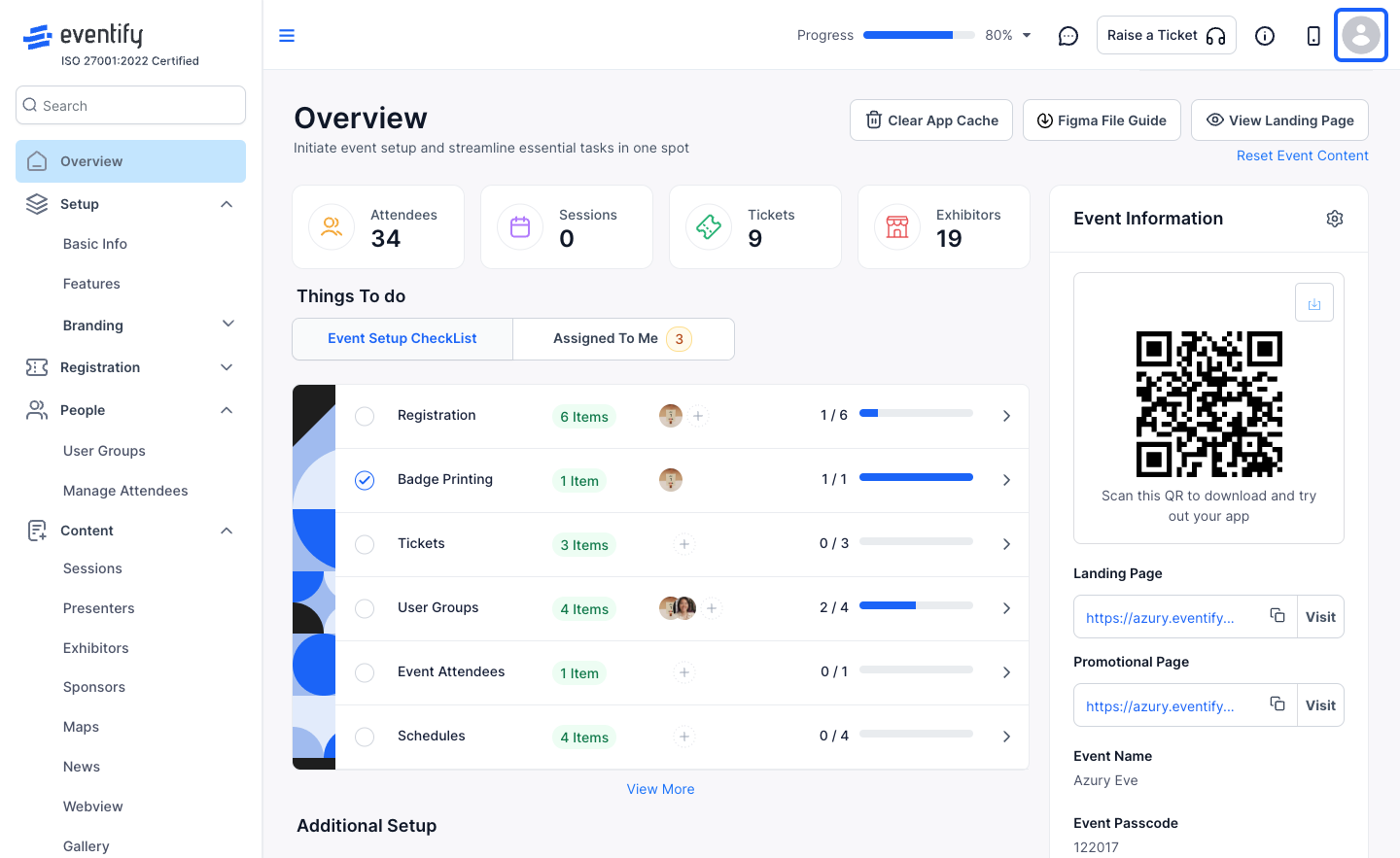
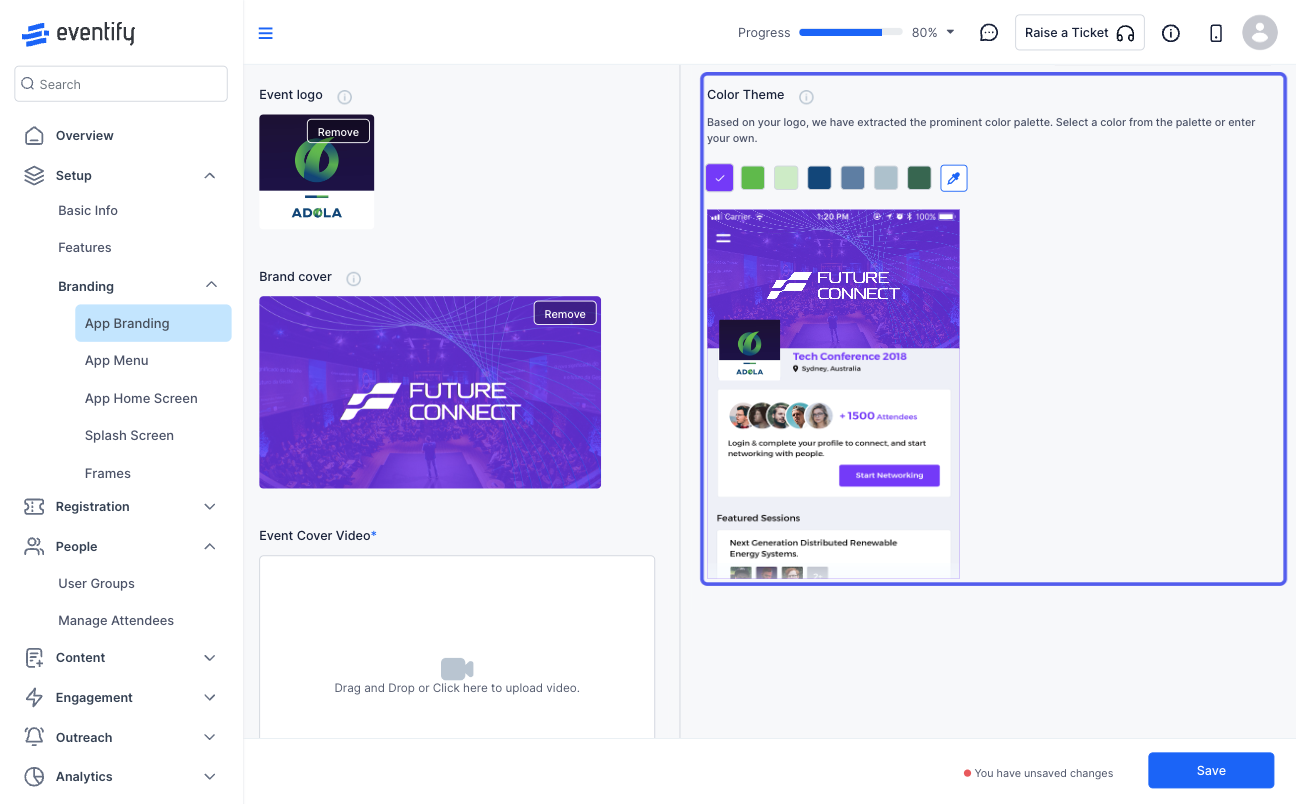
- Branded Mobile Event Apps: Eventify is a specialized, no-code platform that lets users create fully branded Event apps for events, including agendas, speaker lists, sponsors, and attendee tools, all customizable and without additional development.
- No Pay‑Per‑Attendee Surprises: Unlike platforms that charge higher fees as attendance grows, Eventify’s structure keeps costs steady and easy to forecast.
Eventify Pricing
Eventify stands out as a transparent, all-in-one event management platform that combines clear, tiered pricing with powerful features. Its no-percentage ticket fees, branded mobile apps, integrated engagement and networking tools, and inclusive marketing options provide organisers with predictable costs and enhanced event experiences. Compared to Eventbrite, Eventify’s focus on value, flexibility, and user-friendly design ensures that organisers can maximise revenue, simplify operations, and deliver professional, engaging events without hidden charges or unnecessary add-ons. You can check it out by requesting a demo here.
Does Eventbrite pricing fit your budget?
Eventbrite is a popular platform for event organisers, particularly suited for small to medium-sized public events, community workshops, and conferences. Its intuitive ticketing and registration system, combined with basic promotional tools, makes it easy for organisers to set up events quickly. It also supports hybrid and virtual events through integrations with platforms like Zoom. However, it is less suited for highly private, invitation-only events or those requiring complex customisation and advanced engagement features. However, Eventify is a strong alternative. With no percentage-based ticket fees, clear tiered plans, built-in engagement and networking tools, branded mobile apps, and dedicated support, Eventify empowers organisers to deliver professional events while keeping costs predictable and maximising revenue. Get started with Eventify today
.png)