

Planning a successful event requires more than choosing a date and booking a venue. Event organizers must coordinate budgets, vendors, speakers, registration, marketing, logistics, attendee engagement, and post-event reporting.
An event planning timeline brings these activities together in a structured schedule, helping teams manage deadlines, assign responsibilities, track milestones, and prepare for unexpected changes.
Whether you're organizing a corporate conference, trade show, product launch, networking event, workshop, fundraiser, or hybrid event, this guide covers the complete event planning process, including a month-by-month timeline, practical checklist, reusable template, and expert planning tips.
What Is an Event Planning Timeline?
An event planning timeline is a chronological schedule of tasks, milestones, deadlines, and responsibilities required to plan, organize, execute, and evaluate an event. It helps organizers arrange the events in the correct order by mapping dependencies and deadlines.
It helps event organizers understand:
- What needs to be completed
- When each task should begin and finish
- Who is responsible for each activity
- Which tasks depend on other tasks
- What resources and approvals are required
- How to monitor progress and identify delays
An event planning schedule focuses on deadlines throughout the planning process. An event agenda outlines the sessions and activities attendees experience during the event.
What Is the Ideal Event Planning Timeline?
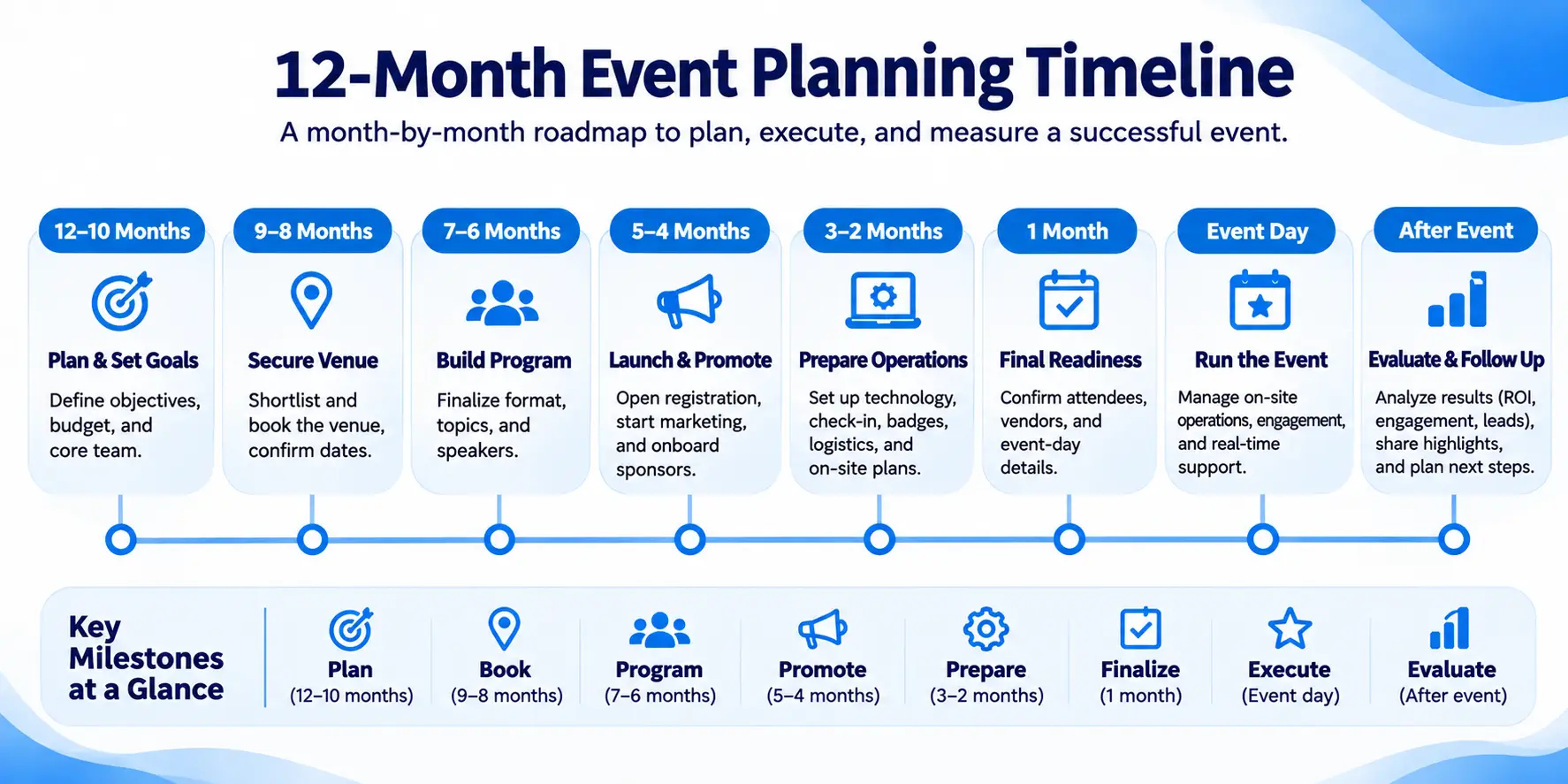
A typical event planning timeline starts 12 months before a large event with objectives, budgeting, and venue research. Planning then progresses through speakers, registration, marketing, logistics, attendee communications, event-day execution, and post-event evaluation.
Smaller events can follow the same process within 4–8 weeks.
Why Is an Event Planning Timeline Important?
A well-organized event planning roadmap helps teams manage responsibilities, monitor progress, and coordinate activities across departments.
Key benefits
Better project management: Break complex projects into smaller tasks with realistic deadlines.
Clear task ownership: Assign responsibilities across event managers, marketing teams, vendors, and stakeholders.
Stronger budget control: Monitor event expenses, payment schedules, and approvals.
Smoother coordination: Keep speakers, sponsors, exhibitors, suppliers, and internal teams aligned.
Lower operational risks: Identify dependencies and potential issues early.
Better attendee experience: Coordinate registration, communication, accessibility, and engagement.
Measurable results: Track attendance, engagement, revenue, and event ROI.
How Far in Advance Should You Plan an Event?
The ideal event planning schedule depends on the event's size, format, complexity, audience, and budget.
These are general estimates. Events involving international speakers, extensive production, multiple sponsors, or large audiences may require additional time.
12-Month Event Planning Timeline
This comprehensive event planning timeline provides a framework for managing conferences, corporate events, exhibitions, and other complex gatherings. Smaller events can adapt it to shorter planning periods.
12 Months Before: Define Objectives and Strategy
Start with the foundation of your event.
Tasks:
- Define event goals, objectives, and expected outcomes.
- Identify the target audience and attendee personas.
- Establish measurable event KPIs.
- Estimate attendance and revenue targets.
- Create an initial event budget.
- Determine the event format: in-person, virtual, or hybrid.
- Shortlist dates and locations.
- Identify stakeholders and decision-makers.
- Establish the event planning team.
- Research competing events and scheduling conflicts.
Milestone: Event objectives, budget framework, and planning strategy approved.
10–9 Months Before: Venue Selection and Contracts
Venue selection influences the event's budget, accessibility, logistics, and attendee experience.
Tasks:
- Research venues and request proposals (RFPs).
- Compare capacity, facilities, pricing, and availability.
- Conduct venue inspections and site visits.
- Evaluate accessibility, transportation, parking, and accommodation.
- Review contracts, cancellation policies, and payment schedules.
- Confirm the event date and venue.
- Identify major vendors and production requirements.
- Begin discussions with keynote speakers and sponsors.
Milestone: Venue, date, and major requirements confirmed.
8–6 Months Before: Program and Marketing Strategy
Begin developing the event experience and promotional strategy.
Tasks:
- Confirm speakers, presenters, moderators, and session leaders.
- Develop the event agenda and session formats.
- Create sponsorship packages and exhibitor opportunities.
- Build the event website and landing page.
- Select event planning software and event management tools.
- Choose an event registration system.
- Develop the event marketing plan.
- Establish registration targets and ticket pricing.
- Prepare branding, messaging, and promotional assets.
- Identify event technology requirements.
Milestone: Program framework, marketing strategy, and registration plan ready.
5–4 Months Before: Registration and Promotion
This stage focuses on attracting attendees and building awareness.
Tasks:
- Launch event registration and ticket sales.
- Announce speakers, sessions, and program highlights.
- Activate email marketing and social media campaigns.
- Publish event-related content.
- Begin sponsor and exhibitor outreach.
- Confirm catering, transportation, and accommodation.
- Plan networking and attendee engagement activities.
- Establish registration tracking and reporting.
- Finalize major production requirements.
Milestone: Registration is live and event promotion is underway.
3 Months Before: Operations and Logistics
Start coordinating the operational details required to deliver the event.
Tasks:
- Review registrations against attendance targets.
- Confirm speakers, travel, and accommodation.
- Finalize session schedules and presentation requirements.
- Confirm vendors, suppliers, and production teams.
- Develop the event-day checklist.
- Plan attendee check-in and badge printing.
- Finalize sponsor and exhibitor deliverables.
- Confirm catering and accessibility requirements.
- Prepare signage and event materials.
- Develop contingency plans for operational risks.
Milestone: Operational plan and event schedule approved.
2 Months Before: Attendee Experience and Technology
Focus on communication, engagement, and event technology.
Tasks:
- Send attendee information and event updates.
- Review registration and marketing performance.
- Finalize mobile event app content.
- Upload speakers, sessions, and schedules.
- Plan networking, live polls, and Q&A.
- Confirm sponsor booths and exhibitor arrangements.
- Coordinate staff and volunteer assignments.
- Test registration, ticketing, and attendee communication workflows.
- Confirm virtual or hybrid event technology requirements.
Milestone: Attendee experience and engagement plans finalized.
1 Month Before: Final Event Planning
Use the final month to confirm every major component.
Tasks:
- Confirm venue, vendors, speakers, and sponsors.
- Review the final event agenda.
- Verify registration and ticketing systems.
- Prepare attendee emails and reminders.
- Finalize catering and seating arrangements.
- Confirm badge printing and check-in procedures.
- Test event technology and production equipment.
- Prepare staff briefing documents.
- Review safety procedures and emergency plans.
- Confirm outstanding payments and budget commitments.
Milestone: All major event components confirmed.
2 Weeks Before: Final Coordination
Tasks:
- Review registration numbers and expected attendance.
- Confirm vendor orders and delivery schedules.
- Share the event planning schedule with stakeholders.
- Prepare attendee lists and badges.
- Conduct speaker rehearsals.
- Test AV equipment and internet connectivity.
- Review staff and volunteer assignments.
- Confirm accessibility and venue layouts.
- Prepare contingency plans for potential disruptions.
Milestone: Event team and suppliers are ready.
1 Week Before: Operational Readiness
Tasks:
- Send final attendee reminders.
- Confirm check-in procedures.
- Verify session timings and speaker availability.
- Prepare registration desk materials.
- Confirm catering headcount.
- Review the run of show with the event team.
- Test all devices, equipment, and technology.
- Prepare emergency contact lists.
- Conduct a final venue walkthrough.
Milestone: Final readiness confirmed.
1 Day Before the Event
Tasks:
- Complete venue setup and signage installation.
- Test microphones, screens, lighting, and presentations.
- Set up registration desks and badge printers.
- Verify sponsor and exhibitor booths.
- Conduct the final staff briefing.
- Confirm vendor arrival and setup schedules.
- Review the event agenda and emergency procedures.
- Test attendee check-in and the mobile event app.
- Resolve outstanding operational issues.
Milestone: Venue and technology ready for event day.
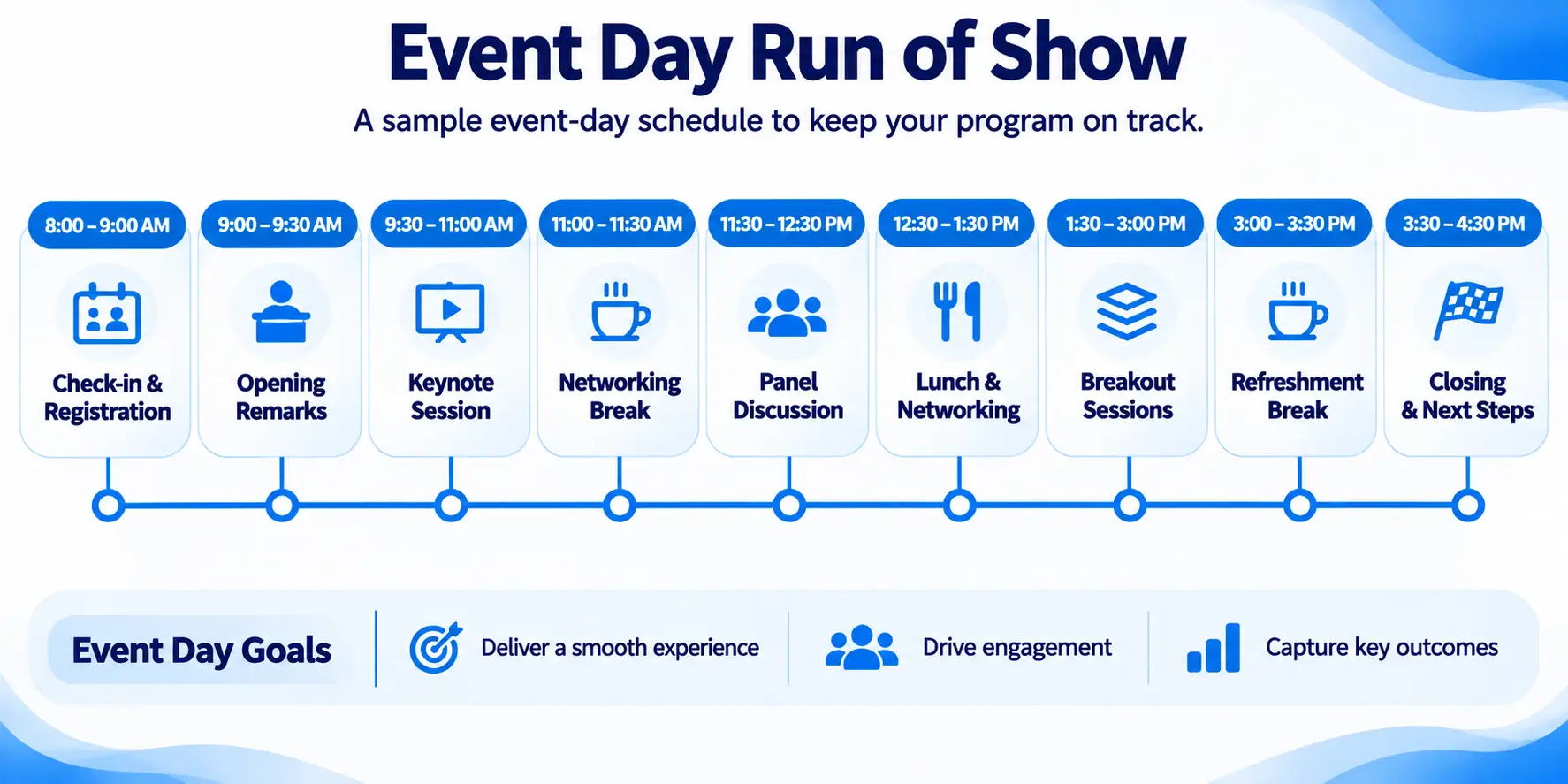
Day-of Event Timeline: Run of Show
A day-of event timeline, commonly called a run of show, is a detailed operational schedule that specifies activities, timings, responsibilities, and technical cues.
Adjust this event schedule template to match your event format, program, and operational requirements.
Post-Event Timeline: What to Do After the Event
Post-event activities help evaluate performance, maintain relationships, and improve future events.
Within 24 Hours
- Send thank-you emails to attendees, speakers, sponsors, and partners.
- Share event highlights and important announcements.
- Distribute feedback surveys.
- Follow up on urgent sponsor and exhibitor requests.
- Record immediate operational observations.
Within 3–5 Days
- Review attendee feedback and survey responses.
- Share presentations, recordings, and resources.
- Follow up with leads and business contacts.
- Analyze attendance and engagement data.
- Collect feedback from staff and vendors.
Within 1–2 Weeks
- Review registration and attendance performance.
- Analyze event marketing results.
- Evaluate sponsor and exhibitor outcomes.
- Reconcile invoices and outstanding payments.
- Conduct an internal event debrief.
Within 30 Days
- Prepare the final event report.
- Compare actual spending with the planned event budget.
- Measure event ROI and objectives achieved.
- Document lessons learned.
- Update the event planning process.
- Begin planning recurring events where applicable.
Event Planning Checklist: 40 Essential Tasks
Use this event planning checklist to organize tasks, assign responsibilities, and monitor completion.
Event Strategy and Planning
- Define event goals and objectives
- Identify target audience
- Establish date and event format
- Prepare event budget and contingency
- Assemble planning team
- Assign roles and responsibilities
- Select venue or virtual platform
- Review contracts, permits, and insurance
Program and Logistics
- Confirm speakers and presenters
- Develop event agenda
- Book vendors and suppliers
- Arrange catering and accommodation
- Plan transportation and parking
- Confirm sponsors and exhibitors
- Prepare signage and branding
- Verify accessibility requirements
Marketing and Registration
- Create event website or landing page
- Set up event registration system
- Configure ticketing and payment options
- Establish registration deadlines
- Develop event promotion timeline
- Prepare email invitations
- Schedule social media campaigns
- Track registrations and conversions
Event-Day Operations
- Prepare venue and equipment
- Brief staff and volunteers
- Test AV and connectivity
- Set up check-in and badges
- Confirm session timings
- Coordinate vendors and speakers
- Review emergency procedures
- Conduct technical rehearsals
Post-Event Activities
- Send thank-you messages
- Collect attendee feedback
- Share event materials
- Follow up with leads
- Analyze event performance
- Reconcile event expenses
- Prepare final event report
- Document lessons learned
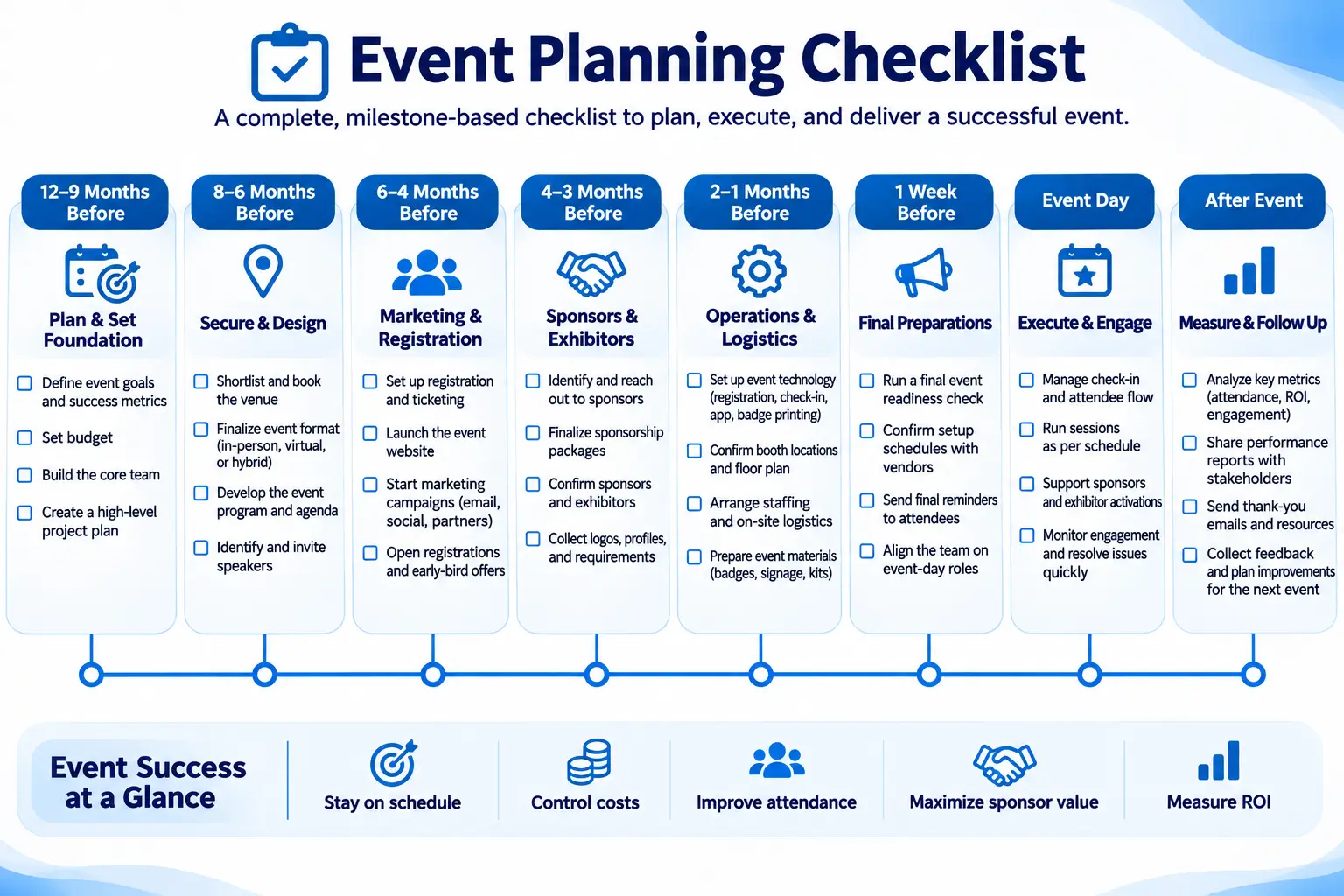
Download the Event Planning Timeline Template
Use the accompanying Excel toolkit to organize your planning process and track progress.
The toolkit includes:
- 12-month event planning timeline
- Task owner, deadline, priority, and status tracker
- Event-day run of show template
- Event planning checklist
- Budget tracker with variance calculations
Download the Event Planning Timeline Excel Toolkit
How to Create an Event Planning Roadmap
Follow these steps to develop an event planning roadmap that suits your goals, resources, and deadlines.
1. Define Your Objectives
Determine what the event needs to accomplish. Objectives may include generating leads, educating attendees, increasing brand awareness, building a community, or generating revenue.
2. Establish the Event Budget
List expenses such as venue rental, catering, speakers, production, marketing, staffing, and event technology. Include a contingency budget for unexpected costs.
3. Set the Event Date and Work Backward
Start with the event date and identify the deadlines that must be met before it. This backward-planning approach helps establish realistic milestones and arrange the events in the correct order.
4. Break Projects Into Smaller Tasks
To arrange the events in the correct order, group activities into manageable tasks and identify which milestones must be completed first. For example, launching an event registration system may involve:
- Defining registration categories
- Setting ticket pricing
- Creating registration forms
- Configuring payment processing
- Testing confirmation emails
- Publishing the registration page
Smaller tasks are easier to assign, track, and complete.
5. Assign Owners and Dependencies
Identify the person responsible for each task and determine which activities depend on others. Dependencies help teams arrange the events in the correct order rather than scheduling work before required decisions are complete.
For example, event marketing cannot launch effectively until the event date, venue, branding, and registration details are confirmed.
6. Review and Update the Timeline
Monitor progress through regular planning meetings. Update deadlines when circumstances change and communicate adjustments to all stakeholders. Revisit the sequence regularly to arrange the events in the correct order as plans evolve.
Event Budget Planning and Expense Management
Event budgeting should happen throughout the event planning process, not only during the initial planning stage.
Common event expenses include:
- Venue rental and setup
- Catering and beverages
- Speaker fees and travel
- AV equipment and production
- Event marketing and advertising
- Event planning software and technology
- Event staff and volunteers
- Printing, signage, and badges
- Transportation and accommodation
- Insurance and permits
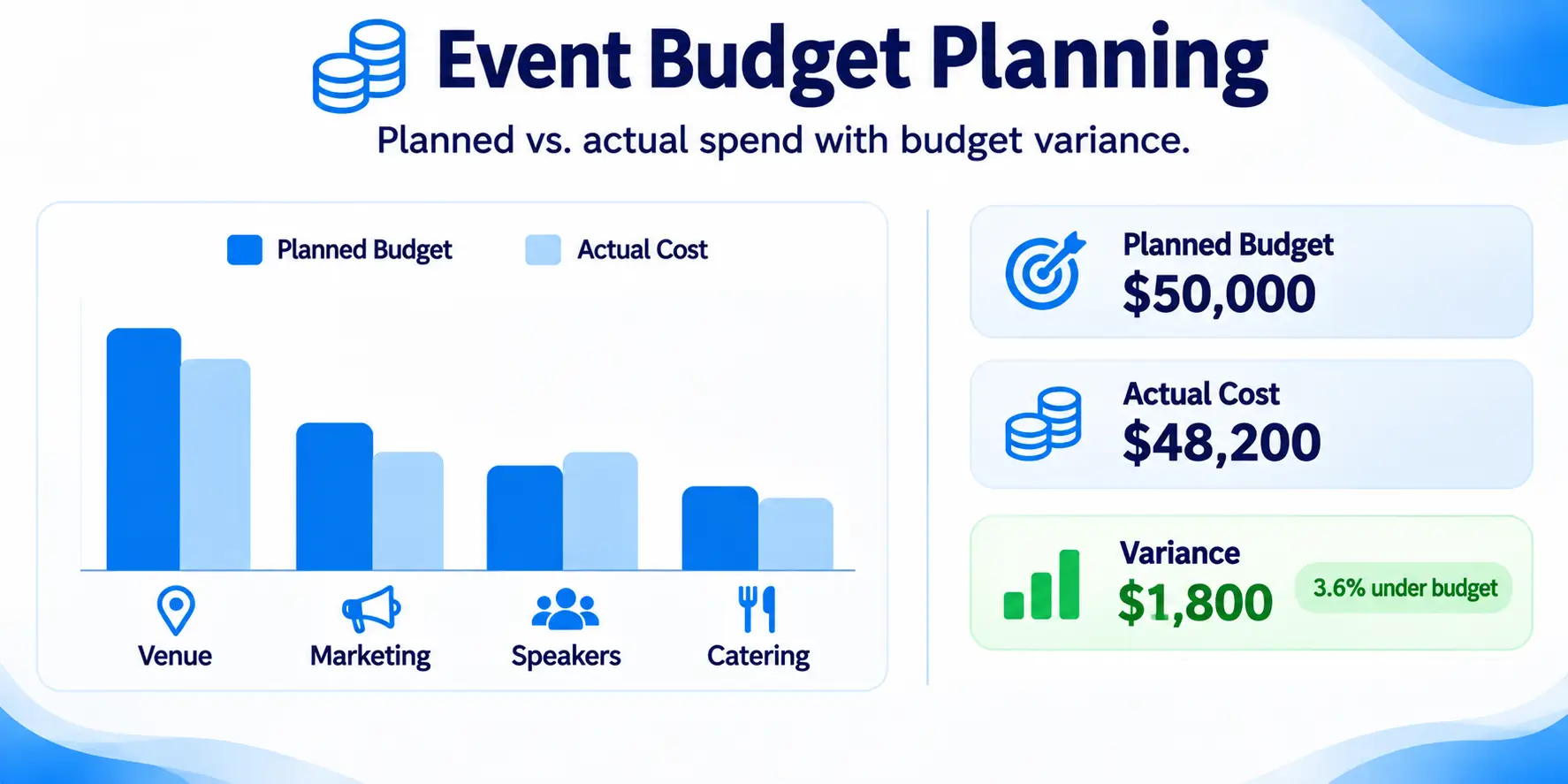
Use an event budget tracker to compare planned expenses with actual costs.
These figures are illustrative. Actual costs depend on event size, location, and requirements.
Review the budget at major milestones, obtain approval for significant changes, and maintain a contingency budget for unexpected expenses.
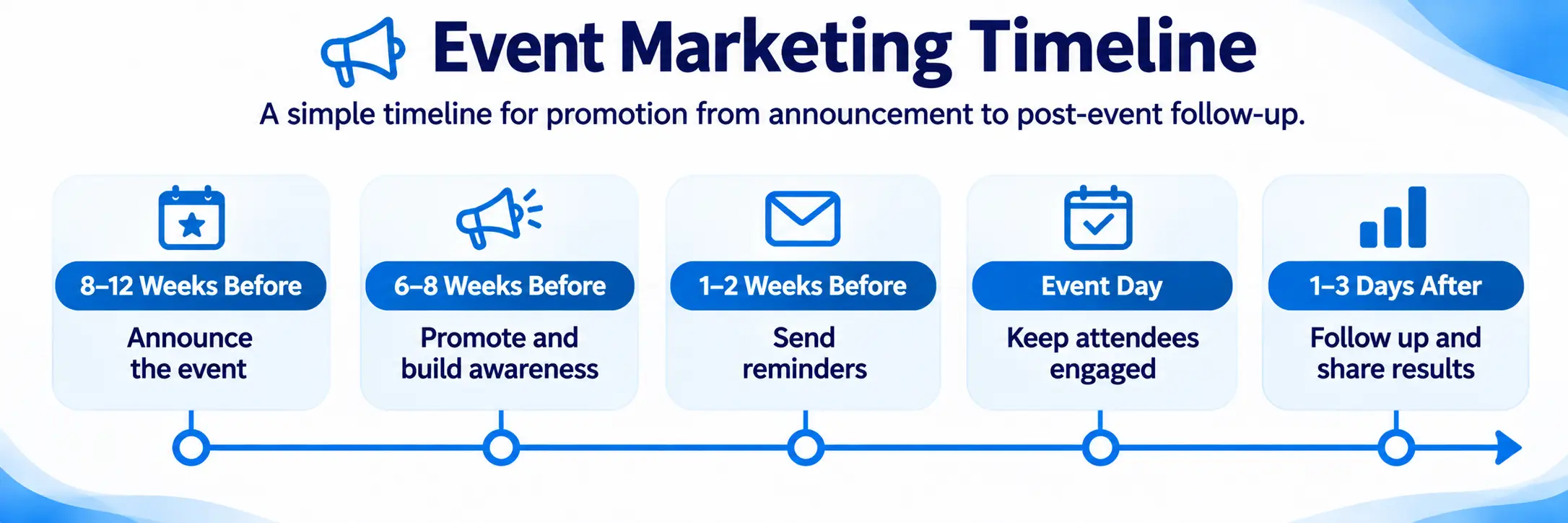
Event Marketing and Promotion Timeline
An event marketing plan and event promotion timeline help build awareness, attract registrations, and maintain engagement throughout the planning process.
Track website traffic, registration conversion rate, email engagement, ticket sales, and campaign performance to identify which channels contribute to attendance.
Event Registration and Ticketing Planning
Registration is a critical part of the attendee journey. Planning it early helps prevent technical issues and improves the registration experience.
Essential tasks:
- Choose event registration software.
- Define attendee categories and ticket types.
- Set ticket pricing, discounts, and deadlines.
- Create registration forms.
- Configure payment processing.
- Set up confirmation and reminder emails.
- Test registration on desktop and mobile.
- Monitor registration numbers and conversion rates.
- Prepare attendee lists for check-in.
- Establish onsite registration procedures.
For larger events, connecting registration with ticketing, check-in, badge printing, attendee communications, and reporting can reduce manual work.
Attendee Experience and Accessibility Planning
The attendee experience should be part of the event planning schedule from the beginning.
Before the Event
- Provide clear registration information.
- Share venue, transportation, and accommodation details.
- Communicate accessibility arrangements.
- Send session information and reminders.
- Provide support for attendee questions.
During the Event
- Make registration and check-in straightforward.
- Provide clear signage and directions.
- Ensure accessible venue layouts.
- Schedule appropriate breaks.
- Support networking and attendee engagement.
- Provide help desks or support contacts.
After the Event
- Send thank-you messages.
- Share relevant resources and recordings.
- Collect attendee feedback.
- Provide follow-up information.
- Communicate next steps and future opportunities.
Event Planning Software and Technology Timeline
Event planning software can help teams coordinate tasks, manage deadlines, and track progress. Event management software can also connect attendee-facing and operational workflows.
For organizations managing multiple workflows, an integrated event management software platform can simplify planning, reduce disconnected processes, and improve reporting.
Explore Eventify's solutions:
- Event Management Software
- Event Registration Software
- Event App
- Event Check-In Software
- Event Ticketing Software
- On-Site Event Badge Printing
- Lead Retrieval App
Sponsor and Exhibitor Planning Timeline
Sponsors and exhibitors need enough time to evaluate opportunities, prepare materials, and coordinate their participation.
Track sponsorship revenue, exhibitor participation, leads generated, meetings booked, and sponsor satisfaction to measure event performance.
How to Measure Event ROI and Performance
Post-event evaluation helps determine whether the event achieved its objectives and delivered value.
Key event metrics
The formula for event ROI is:
Event ROI = (Event revenue − Event costs) ÷ Event costs × 100
For events focused on education, community, or brand awareness, financial ROI may not be the only success measure. Consider objectives such as knowledge gained, audience engagement, brand reach, and relationship development.
Expert Planning Tips for a More Successful Event
These practical recommendations can help event organizers reduce avoidable problems and improve coordination.
Don't delay registration. Launch 3–6 months in advance for many conferences to build momentum and give attendees time to plan.
Test technology early. Run full checks for registration, check-in, the event app, presentations, and connectivity well before event day.
Track progress weekly. Review key milestones, registrations, budget, and vendor readiness with your team.
Plan for changes. Maintain contingency plans for speaker cancellations, technical issues, and vendor delays.
Keep one source of truth. Use a centralized event planning schedule so teams work from the same information.
Review attendee feedback. Use surveys, engagement data, and team debriefs to improve future events.
Common Event Planning Timeline Mistakes
Avoid these mistakes when organizing an event:
1. Starting too late: Popular venues, speakers, and suppliers may become unavailable.
2. Setting unrealistic deadlines: Give teams sufficient time to complete tasks and obtain approvals.
3. Not assigning task owners: Shared responsibility without clear ownership can lead to missed deadlines.
4. Ignoring dependencies: Registration, marketing, and logistics rely on earlier decisions being completed.
5. Underestimating the budget: Include operational costs and a contingency reserve.
6. Delaying attendee communications: Late information can affect attendance and satisfaction.
7. Skipping technical rehearsals: Test event technology before attendees arrive.
8. Neglecting post-event evaluation: Without performance analysis, teams miss opportunities to improve future events.
Frequently Asked Questions About Event Planning Timelines
1. What should an event planning timeline include?
An event planning timeline should include objectives, budget, venue selection, vendors, speakers, marketing, registration, logistics, attendee communications, event-day activities, and post-event evaluation.
2. How do you create an event planning timeline?
Define objectives, establish a budget, set the event date, work backward to identify milestones, break tasks into smaller activities, assign owners, establish dependencies, and track progress.
3. How early should you start planning an event?
Small events may require 2–8 weeks, while corporate conferences and large exhibitions often require 6–12 months or more.
4. What is the difference between an event timeline and an event agenda?
An event planning timeline covers the entire planning process before, during, and after an event. An event agenda outlines the sessions, activities, and timings scheduled for attendees.
5. What is a run of show?
A run of show is a detailed event-day schedule that includes timings, activities, speakers, responsibilities, and technical cues.
6. What is the best event planning timeline template?
The best event planning timeline template includes tasks, milestones, owners, deadlines, priorities, status, dependencies, and notes. It should be adaptable to the event's size and format.
7. How do you manage multiple events simultaneously?
Use a centralized event calendar, standardized event planning templates, clear ownership, milestone tracking, and regular team reviews. Prioritize tasks according to deadlines, impact, and dependencies.
8. What tools help manage an event planning timeline?
Project management tools, spreadsheets, shared calendars, event planning software, and event management tools can help teams manage tasks, registration, communications, logistics, and reporting.
9. When should event registration open?
For major conferences, registration commonly opens 3–6 months before the event. Smaller events may open registration 4–8 weeks in advance, depending on the audience and promotional strategy.
10. What should happen after an event?
Send thank-you messages, collect feedback, share event materials, follow up with leads, review attendance and engagement, reconcile expenses, and prepare a final performance report.
Plan Your Next Event With Confidence
An effective event planning timeline transforms a complex project into a structured process with clear deadlines, responsibilities, and milestones.
From budgeting and venue selection to registration, marketing, attendee engagement, event-day coordination, and post-event reporting, every stage benefits from careful planning and consistent communication.
The right planning approach, supported by an organized team and suitable event technology, helps reduce operational complexity and create a better experience for attendees, sponsors, speakers, and exhibitors.
Ready to simplify your event planning workflow? Explore Eventify's event management software to manage registration, attendee engagement, check-in, event apps, and event operations in one place.