Nederlands
 Deutsch
 Français
 Español
 Italiano
 Svenska
 Português (Brasil)
 Português (Portugal)
 العربية
 Türkçe
 Polski


In this guide, we will walk you through the 5 stages of managing your event. Read on to learn how you can ace your event whether you’re arranging the first one ever or want to take your event experience to the next level!
Key Takeaways
What are the Stages of Event Management?
Event management can be divided into 5 major work areas which, combined together, create a successful event. Grouping multiple tasks into relevant stages helps in keeping everything organized and easier to manage before, during, and after the event.
Here are the five event stages:
| Stage | What it covers |
|---|---|
| 1. Budgeting and Planning | Define your spending limits, finalize your event date and venue, and assign team responsibilities. |
| 2. Managing Tech, Vendors, and Logistics | Choose your event management software, finalize your suppliers, and manage overall logistics. |
| 3. Marketing and Communication | Develop your overall internal and external communication plan and craft your multi-channel marketing campaigns. |
| 4. Managing the Event Day | Execute event-day tasks, coordinate with the vendors, and adapt as per the developing needs. |
| 5. Executing the Post-event Plan | Collect attendee feedback timely, reconcile your budget, and audit your performance for hosting an even better event in the future. |
Stage 1: Budgeting and Planning
Planning all the activities of event management beforehand will save you from making last-minute decisions. You will have everything under control and will be prepared to handle unforeseen situations once your basics are set in place.
Follow these 7 steps:
Set a budget
Setting a budget allows you to measure ROI for every single penny you’ll spend. Unlike a few years ago, you don’t need to hire professionals for budgeting anymore. With tools like Eventify, you can manage event budgeting easily even if you’re doing it for the first time.
Select the date and venue
Choose a venue that has all the amenities and is preferably easy to access. Instead of only focusing on venue aesthetics, keep event format in mind when choosing the venue. Finalize a date that doesn’t fall near holidays so you can maximize attendance.
Choose event format and lineup
Be generous with your options, but only choose those people as speakers your audience will love. Keep personal preferences aside when finalizing the lineup. For in-person events, prioritize speakers who have the knack for public speaking and engagement.
Build your event team
Assign in-charges, delegate tasks, and develop plans for handling every event task. Ensure there is a Plan B and a second-in-command for every task. Doing so will help you manage unfavorable conditions like a pro.
Define the attendee experience
Decide what attendees will do, how they will interact with each other at the venue, and what experience they will take away with them. Envisioning on behalf of your attendees will allow you to see the strengths and the flaws of your event beforehand.
Plan for the VIPs
If you’ve got special guests coming, you need to plan ahead. Decide where they will stay, how they will arrive at the venue, what event flow and security plan you have in place, and how you will see them off.
Craft the master plan
Jot down every single detail in a single event handbook. Get all stakeholders to review the handbook before you finalize it. Have emergency protocols laid down in the handbook in case there are any situations that need on-the-spot decisions.
Stage 2: Managing Tech, Vendors, and Logistics
Now that you’ve crafted a plan, it’s time to break it down into actionable goals. Your choice of tech, partners, and logistics will decide how well the plan goes.
Here’s how to manage these 3 steps properly:
Select the right tech
Your tech stack will define how easily you manage your event. The easier it is for you to develop, track, and sort information, the smoother it will be for you to coordinate with your team and meet your goals.
If you’re looking for a single event app that can help you manage your entire event, you should definitely try Eventify!
Find reliable partners
Don’t try handling all the tasks by yourself. Focus on developing partnerships and delegate tasks that don’t need your continuous attention. Ideally, you should only have to worry about the execution of your plans during the event and not worry about small details like failing speakers or managing limousines.
Finalize event logistics
Don’t leave the specifics like transport or floor management to the last day. Decide on your travel partners, arrange beforehand for parking, and devise the overall logistics plan to ensure no steps are mismanaged.
Stage 3: Marketing and Communication
Your communication and marketing strategy can make or break the event. Here is how you should tackle the communication and marketing side to ensure you get your message across in the most effective manner:
Curate the communication plan
There must not be any communication lapses if you want to make your event a success. Develop your event communication plan that allows you to centralize and disseminate information in a timely manner.
Try making your communication plan cohesive with your overall event branding strategy. Our guide on event branding can help you develop your personalized strategy if you don’t have one already.
Define your marketing strategy
Get ready to let the world know about your amazing event. Define your event branding guidelines, develop your event website, let your socials speak for your event, and rely on email and SMS marketing to push your event far and wide.
Keep in mind that you need quick marketing wins to promote your event and boost attendee count. To get quick wins, you can look into performance marketing strategies like Meta ads. For example, you can look at Instagram ad inspirations to learn how you can run your own ads in a better way.
Stage 4: Managing the Event Day
Executing all stages of event management properly on the event day is easier said than done. On the event day, having a solid plan (along with a contingency plan) can help you avoid nervousness and mishaps.
These 6 tips will prove to be super helpful for you:
Welcome your attendees
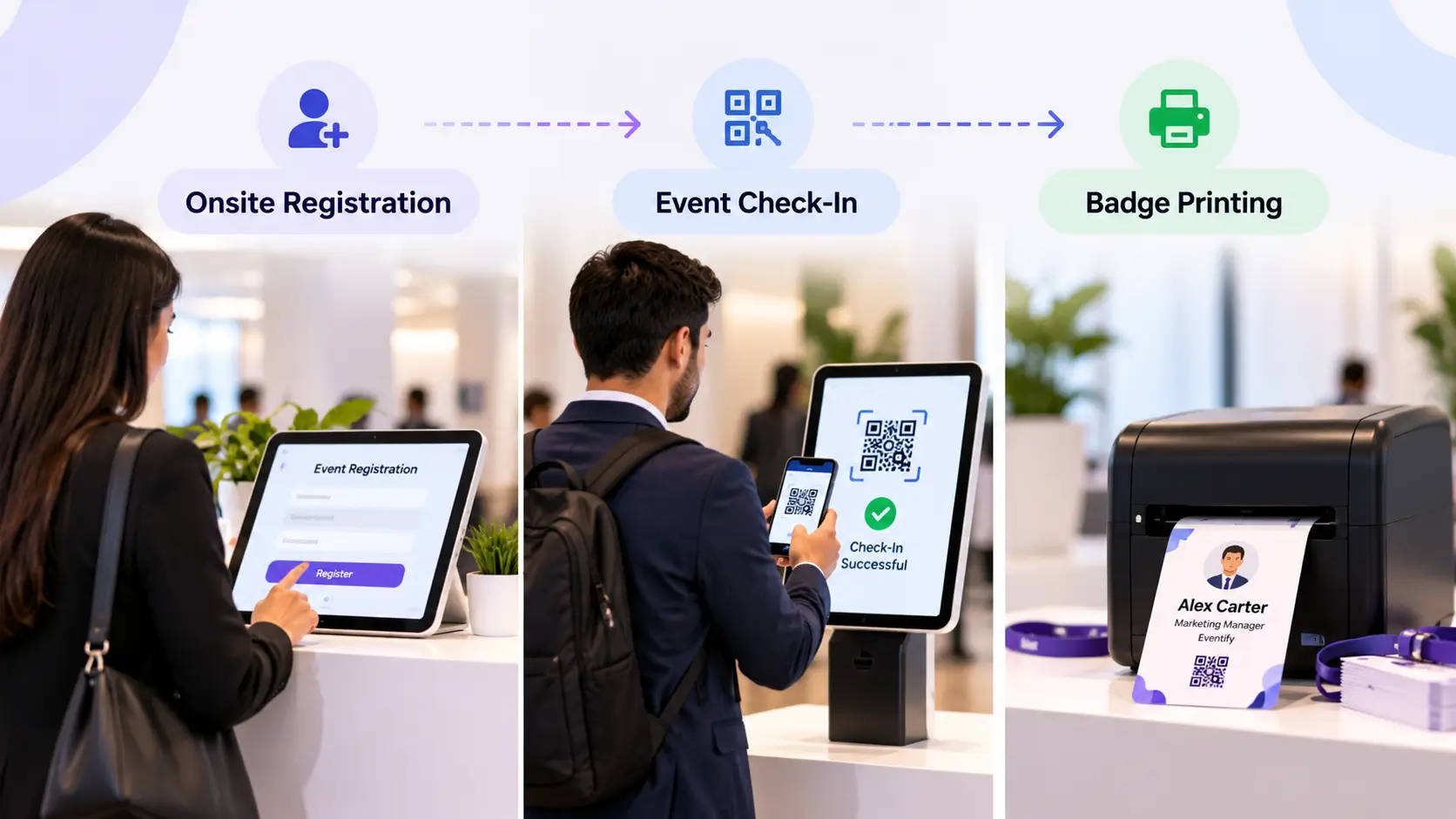
Ensure the attendee check-in experience is seamless. Decide what your attendees will experience first when they join the event. Lay out activities in a way that makes them feel at home and persuade them to stay at the event till the end.
Provide reliable support
Make it easier for the attendees to get information. You can use the Eventify event app feature, so all attendees can see the event schedule, notifications, and proceedings in one place. Have teams ready in case any attendee needs help.
Ensure synchronization of activities
Ensure you never spend less or more time on activities than planned. Provide a seamless transition from one activity to the other. Doing so will ensure that attendees don’t feel bored and look forward to all event proceedings.
Enforce security measures
Security problems can prove difficult to handle. To avoid hiccups in the long run, ensure you have security teams on-premises. Politely keep your attendees in check so there are no breaches of the safety protocols.
Disseminate information timely
In case there are any changes to the flow of the event, you have to ensure that you update your attendees in a timely manner. Use the Eventify event app feature so your attendees can be notified of changes.
Make networking fun
Networking is the most important aspect of your event. Make attendees feel at home and encourage them to interact with each other. Plan networking activities that help attendees make new friends and valuable connections easily.
Stage 5: Executing the Post-event Plan
Done with the event? Buckle up because it’s time to gather and analyze all the data gathered from your event. Doing so will help you identify shortcomings, paint a more realistic picture of how well your event performed, and ensure that your next event becomes an even better success.
Here’s how you can do that:
Gather attendee feedback
Make it easy for the attendees to provide feedback. If possible, provide incentives to attendees who provide in-depth feedback and allow you to record interviews. Try developing yes/no style feedback forms so you can easily compile information later.
Track your KPIs
Set out KPIs so you can easily track the areas that need improvements and find tasks that you aced. Get anonymous feedback from your team members so they can speak their hearts out about the event, helping you make the next edition even better.
Share highlights on socials
Gather all the fun details of your event and ensure you present them wonderfully on socials. Use branded hashtags and also provide incentives to attendees in return for their feedback. Let your socials work as social proof of your event’s success.
Rekindle preparations for the next event
Gather all the data from your event and analyze areas that need improvement. Create a feedback loop where you let your previous event prepare you even better for the next edition. Ensure you stay on the lookout for other events so you don’t lag behind and can adopt new strategies when you hold your next event.
Manage All Event Activities with Eventify
Eventify streamlines the management of all 5 event stages. With Eventify, you are free from the hassle of juggling through spreadsheets and different apps. You can use Eventify as a central source for event organizers, teams, speakers, and attendees to see all the event-related information in one place.
Getting started with Eventify is effortless. Just book your Eventify demo today, and we will show you how you can harness its full power to make event management feel like a breeze with minimal setup steps required!