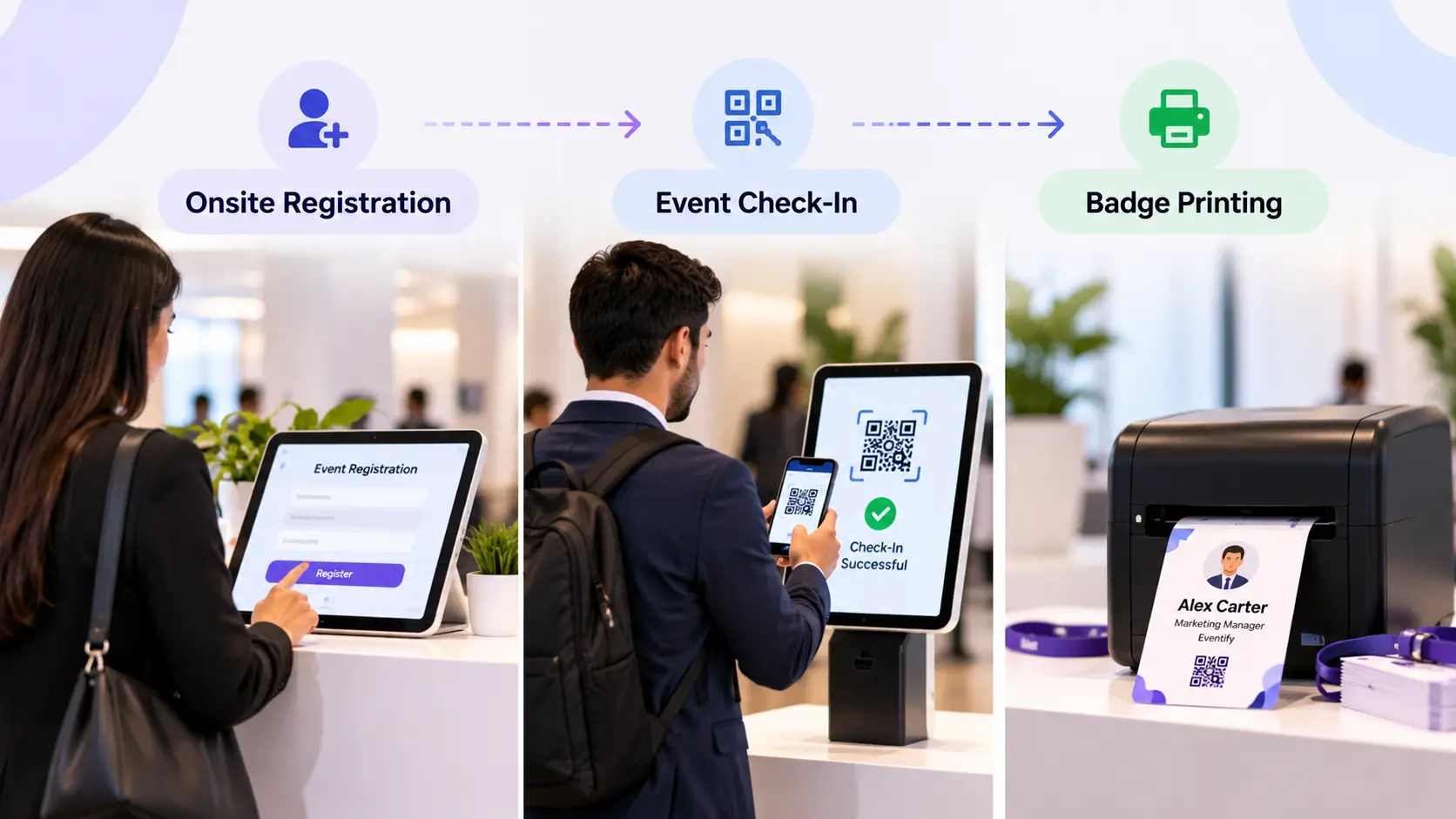
Key Takeaways
Introduction
Picking the wrong event registration platform doesn't just give you an awkward event registration website or sign-up page. It also bleeds money on every ticket sale, creates hours of manual data cleanup after the show, and turns the check-in line into a slow-moving queue that just won't quit. Event registration software is the tool that handles online event registration, from sign-ups and payment processing to confirmations and attendee details. The platform you pick ends up shaping a lot of what comes next, from badge printing to whether your attendee list slides cleanly into your CRM or gets stuck in a spreadsheet.
We tested 15 of the top event registration tools, including Eventify, Whova, Eventbrite, and Cvent, and compared them against the same six criteria, from how fast you can set things up to the real cost once you're selling a lot of tickets. That way, you can match the right tool to your event type instead of guessing based on a features page.
Below you'll find the full comparison table, a breakdown of what actually separates these platforms, deep reviews of each option, and a decision guide to help you choose without second-guessing later.
Comparison Table: 15 Event Registration Platforms at a Glance
How We Tested These 15 Event Registration Software Tools
Every tool on this list was evaluated against the six criteria that actually make online registration platforms better for organizers. We did not rely on marketing claims or product screenshots.
Independent Review Scores
How Do You Choose the Right Event Registration Platform?
Finding the best event registration platforms for your situation depends on four inputs: your event type, your organization's event frequency, whether per-ticket fees are acceptable, and what happens to your attendee data after registration closes.
Match the Platform to Your Event Type
Calculate the True Cost at Your Event Scale
Headline pricing rarely tells the full story. Here's what six platforms actually cost on a $100 ticket at three attendance levels:
The 15 Best Event Registration Software Tools Reviewed in Depth
1. Eventify
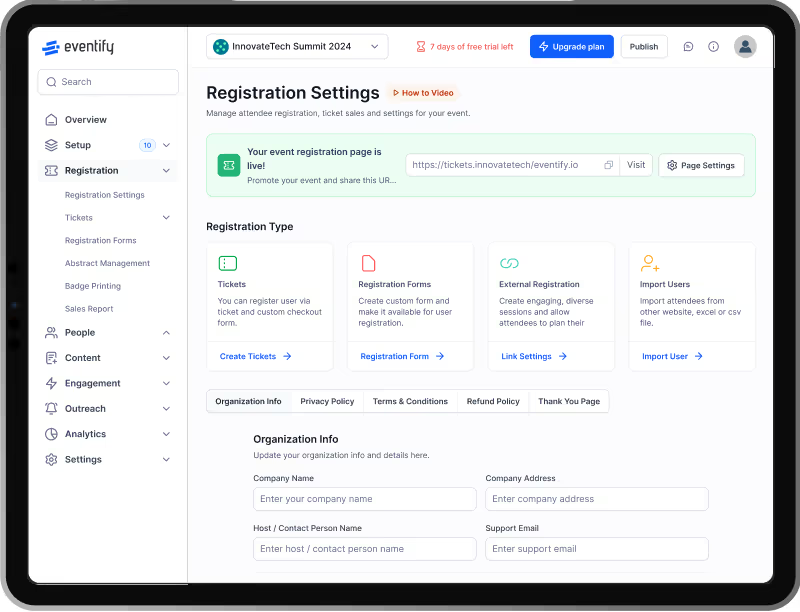
Eventify is a complete event solution with an end-to-end registration system built in. It creates the registration form, sets up the ticketing system, and processes payments in-app. The main highlight of the software is abstract management paired with a self-check-in feature, keeping everything in the same database.
Time to first live event: Under 15 minutes from account creation to a published registration page.
Key Features:
- No per-ticket fee at any volume of sales
- Registration, ticketing, check-in, and badge printing and scanning, all from one coherent database
- Easy-to-customize registration forms with coupons, expiry dates, and discounts
- Attendee analytics, engagement, and abstract management all in one place
- Quick bulk upload of attendee and stakeholder lists to minimize manual effort
- AI-powered attendee networking, matchmaking, and community boards, plus a mobile app with live session Q&A
- Free registration plans for small events
Limitations:
- Not a ticketing marketplace
- Best suited for professional events, not consumer entertainment
Pricing: The Event Registration plan starts at **** per month with no per-ticket fee, and flat pricing regardless of attendance or event frequency.
Best for: Associations, corporates, and event agencies that run multiple professional events a year, where a per-ticket fee would cut into revenue.
Not for: One-off consumer events where marketplace discovery drives ticket sales, or organizers specifically looking for Whova-level community and networking features.
Verdict: The right choice for professional event organizers and associations running 3 to 20 events a year who need registration, ticketing, check-in, and badge printing in one connected system with no per-ticket charges.
2. Whova
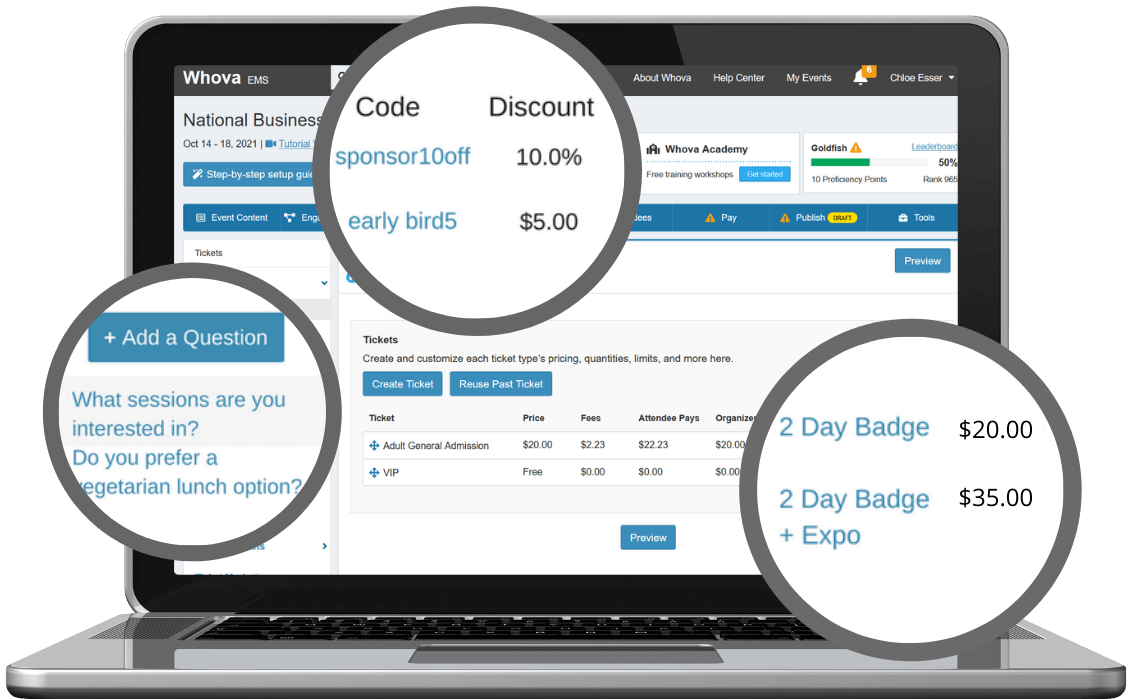
Whova is an all-in-one conference management tool covering registration, ticketing, check-in, badge printing, a mobile event app, community boards, AI-powered networking matchmaking, session Q&A, and exhibitor management.
Time to first live event: 30 to 45 minutes, since the interface has a steeper learning curve than simpler platforms.
Key Features:
- AI-powered attendee networking, matchmaking, and community boards, plus a mobile app with live session Q&A
- Ticket access control by attendee category, day, or session, with separate in-person and virtual visibility
- Branded, fully customizable registration forms with early-bird pricing, group rates, and discount codes
- Auto-triggered, personalized confirmation emails
- Built-in tools to create, manage, and track registration campaigns, with instant payout
Limitations:
- The interface isn't intuitive; reviewers consistently cite this as a primary frustration for first-time users
- Per-event pricing compounds for multi-event organizations
- Analytics are described as limited in independent reviews
Pricing: 3.0% + $0.99 per paid ticket, with no fee for free tickets. Platform pricing is available on request.
Best for: Single large conferences of 200+ attendees where pre-event community building and attendee networking are primary requirements.
Not for: Organizations running more than two events a year; the per-ticket model gets significantly more expensive than flat-fee alternatives at higher event frequency.
Verdict: Whova delivers a strong experience for large events, but many reviews point to a steep learning curve for new users. Otherwise, it's a complete solution.
3. Eventbrite

Eventbrite offers event listing, ticketing, payment processing, and marketing tools, with access to its marketplace of active event-seekers.
Time to first live event: Under 10 minutes, the fastest setup of any platform on this list.
Key Features:
- Free for free events
- Multiple ticket types with independent pricing, built through a no-code landing page builder
- Organizer mobile app for QR-code check-in and real-time ticket-sales tracking
- Built-in social ad and email marketing tools to drive registrations
- Apple Pay and Google Pay support for fast checkout
Limitations:
- The highest per-ticket fee of any established platform on this list
- Limited design customization on event pages
- Not suitable for professional events requiring advanced management features
Pricing: 3.7% + $1.79 per ticket, plus 2.9% payment processing on order totals. Free for free events; Eventbrite Pro is $15/month for high-volume email sending.
Best for: Public-facing consumer events like music, food, community gatherings, and casual classes.
Not for: Corporate events, association conferences, or any organization where per-ticket fees would materially reduce event revenue. If that's you, it's worth comparing Eventbrite alternatives before committing.
Verdict: The fastest platform to launch a public event page, and the right choice when marketplace discovery is a meaningful source of registrations.
4. Cvent
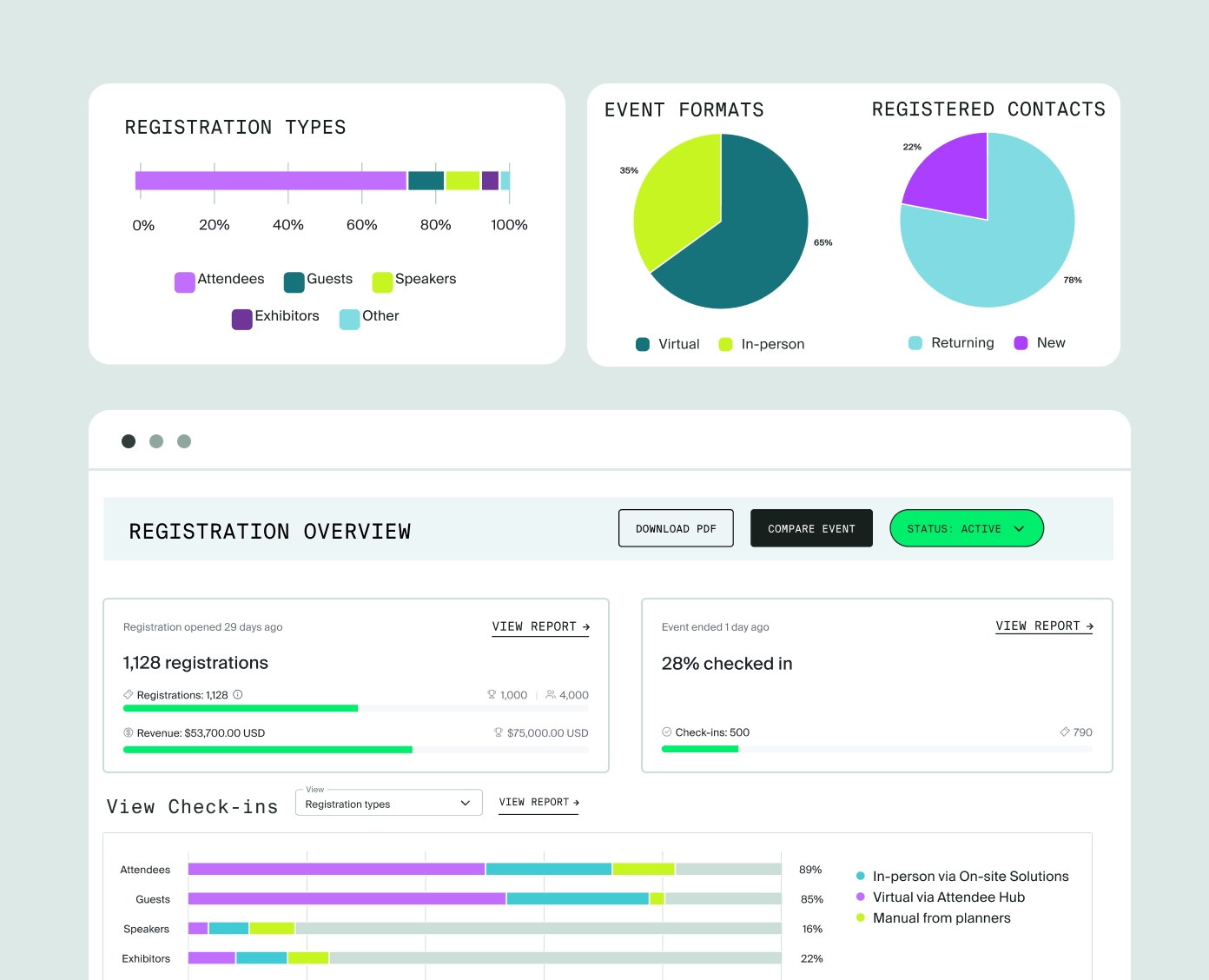
Cvent covers enterprise event registration, website building, marketing, attendee management, venue sourcing, payment processing, and analytics across the full event lifecycle.
Time to first live event: 60+ minutes minimum; significant configuration is required before going live.
Key Features:
- Brand-customizable registration templates with a built-in content library, including maps, floor plans, and brochures
- Automated waitlists and capacity management with configurable restrictions and permissions
- Self-service attendee changes like modify, cancel, or claim refunds without organizer involvement
- Multi-track, multi-session registration support for complex events
- Deep integrations with Salesforce, Marketo, and other enterprise CRMs
Limitations:
- The steepest learning curve on this list, requiring dedicated training
- The highest cost of any platform reviewed
- Customer support is noted as an area needing improvement in independent reviews
Pricing: Available on request through enterprise contracts, estimated at $30+ per $500 ticket plus setup fees; a significantly higher total cost than mid-market alternatives.
Best for: Large enterprise organizations running 20+ events a year with a dedicated events team and existing enterprise tech stack.
Not for: Small to mid-size teams, since the cost and complexity are disproportionate to the event scale that justifies them.
Verdict: A great choice for large conferences of around 1,000 attendees or more; otherwise it's a pricier option for small to mid-sized events, and it needs proper training to use well.
5. Wild Apricot
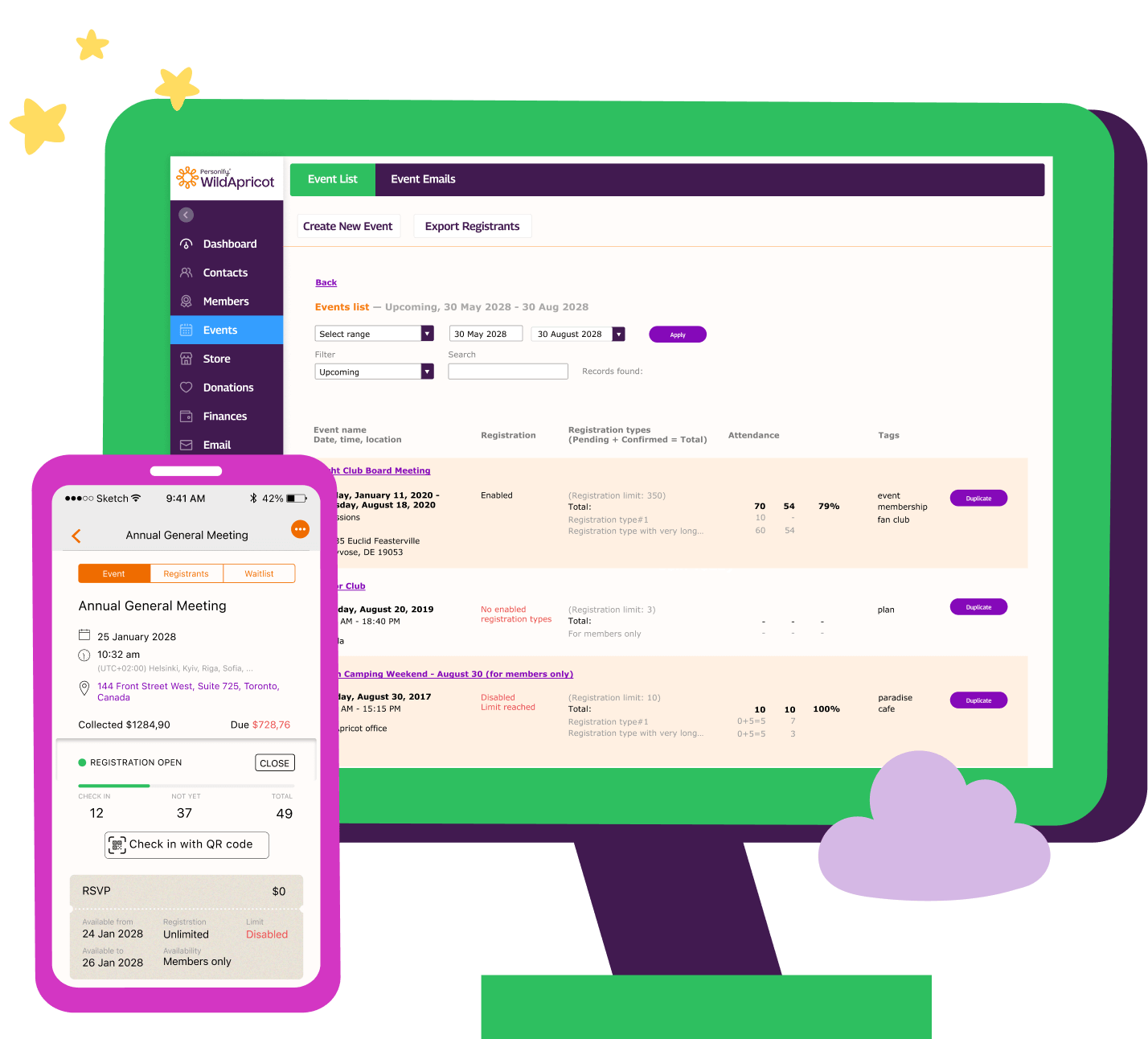
Wild Apricot is a membership management platform with integrated event registration, combining a member database, event pages, payment processing, and renewal management in one system.
Time to first live event: 30 to 45 minutes, straightforward once the membership database is configured.
Key Features:
- Integrated member database with automated renewal management
- Member-only discounts and exclusive registrations applied automatically
- Recurring event support built for membership groups
- Payment processing built directly into the membership platform
Limitations:
- Recent user feedback raises concerns about slowing development and support
- Multiple price increases have been noted by users
- Per-contact pricing makes costs less predictable than per-event models, and the interface feels dated
Pricing: 2.9% + $0.30 per transaction (Visa/Mastercard/Discover), 3.5% + $0.30 for Amex; monthly platform cost scales from $66/month (100 contacts) to $992/month (50,000 contacts).
Best for: Associations, nonprofits, and membership clubs where event registration needs to integrate with member management. See our full list of event management software for nonprofits for more options.
Not for: Event-only organizations with no membership component; the membership overhead adds complexity that event-only teams don't need.
Verdict: The strongest platform on this list for membership organizations where event registration and member management need to sit in the same system, but the wrong fit for event-only use cases or organizations outside the nonprofit sector.
6. RingCentral Events
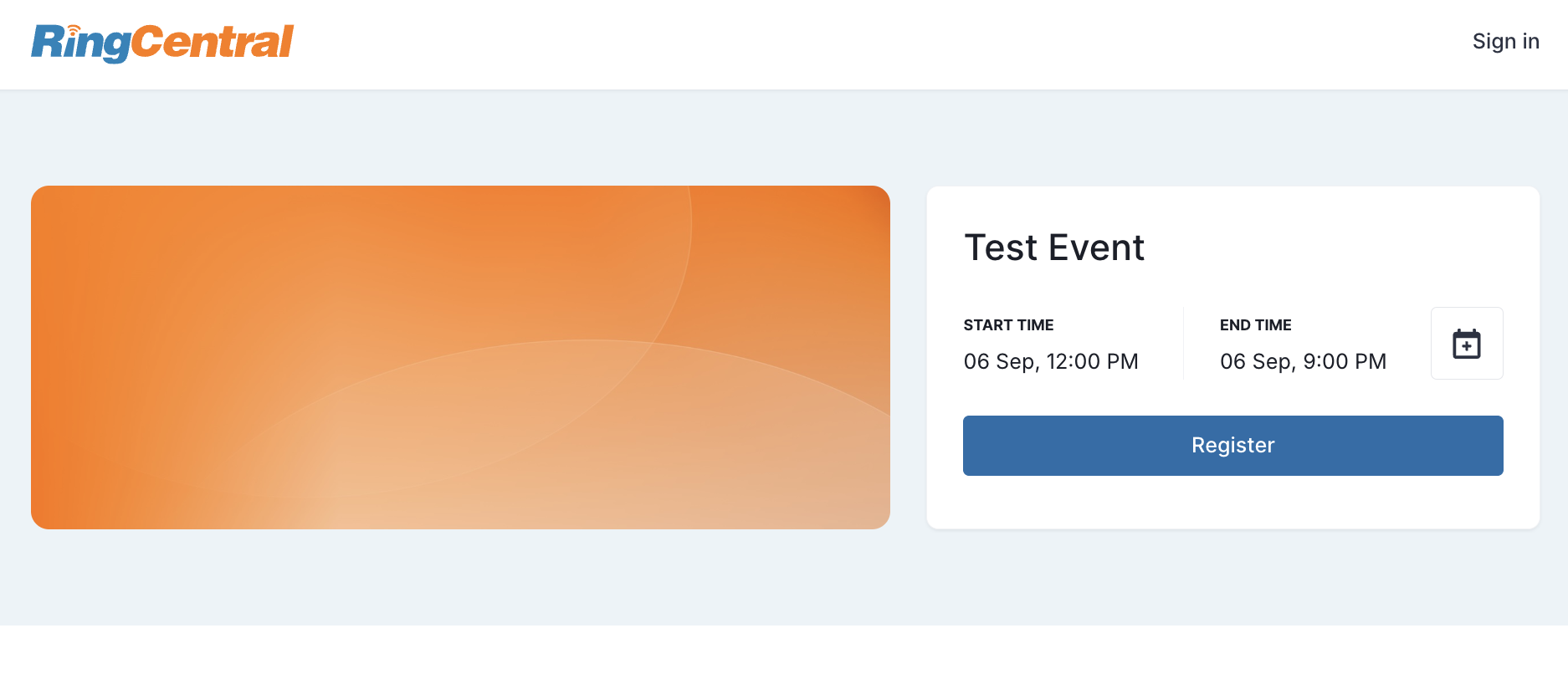
RingCentral Events handles virtual and hybrid event registration, live sessions, breakout rooms, networking, expo areas, and sponsor booths, now as part of the broader RingCentral product suite.
Time to first live event: 30 to 45 minutes for a basic virtual event; longer for hybrid configurations.
Key Features:
- Live sessions, breakout rooms, and virtual expo/sponsor booths
- Simultaneous in-person and virtual registration with separate access tiers
- Engagement analytics on virtual attendee behavior
- Part of the broader RingCentral communications suite
Limitations:
- Pricing increased significantly following the RingCentral acquisition
- The backend interface is described as less intuitive in independent reviews
- A per-ticket fee of 2.9% + $0.30 + 2% application fee is among the highest on this list
Pricing: 2.9% + $0.30 + 2% application fee per ticket, plus a monthly subscription available on request. Request current pricing directly, since pre-acquisition pricing is still posted on many third-party sources.
Best for: Organizations running virtual or hybrid events where online audience engagement is the primary value proposition.
Not for: Organizations running solely in-person events.
Verdict: The strongest virtual and hybrid event registration platform on this list. It's the right choice when online engagement tools are the primary requirement, and the wrong choice for primarily in-person events.
7. Jotform
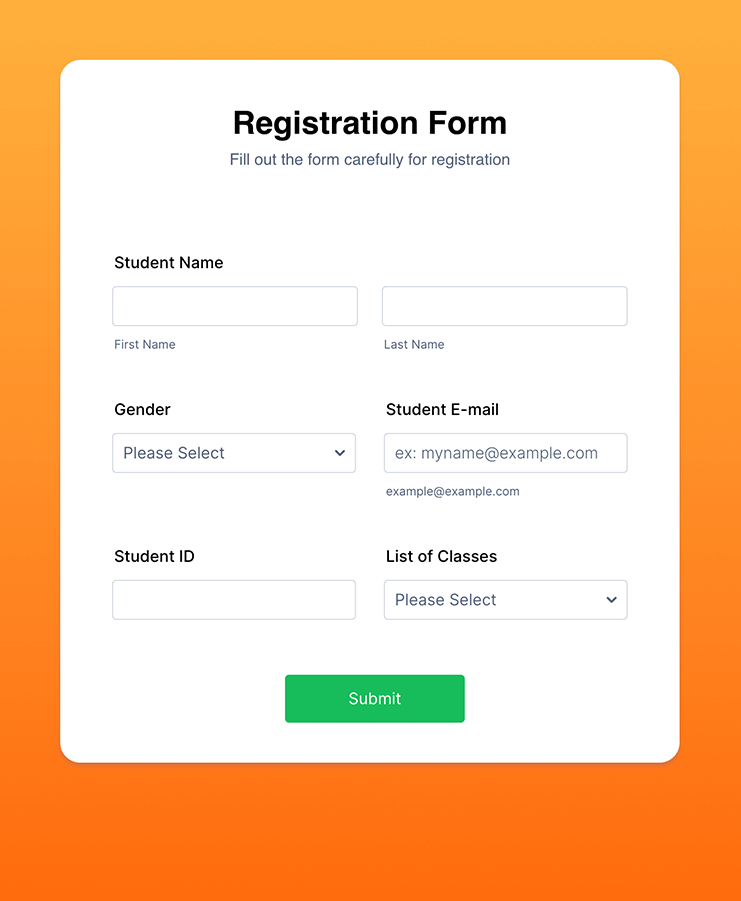
Jotform is an AI-powered form builder that creates event registration forms, event pages, and AI agents from a single prompt, connecting to Jotform Tables for attendee data management.
Time to first live event: Under 10 minutes with AI generation, one of the fastest setups on this list.
Key Features:
- AI-generated event pages and forms created from a single prompt
- 100+ pre-designed, brand-customizable templates (logo, color, fonts)
- No processing fee on your first 10 payment submissions; 256-bit SSL encryption throughout
- Jotform Workflows automates confirmations, reminders, and follow-ups
- Data syncs directly into Jotform Tables for easy management
Limitations:
- No built-in check-in, badge printing, or attendee networking
- No video conferencing for online-only events without a third-party integration
- Not a dedicated event management platform
Pricing: A free plan covers up to 5 forms and 100 submissions/month; Bronze starts at $34/month, Silver at $39/month, Gold at $99/month.
Best for: Organizations that need fast, flexible registration forms without the cost or complexity of a full event management platform.
Not for: Professional events requiring integrated check-in, badge printing, or attendee management beyond data collection.
Verdict: A quick fix for registration only. Use it to launch fast, then migrate to a full platform as event complexity requires.
8. Splash
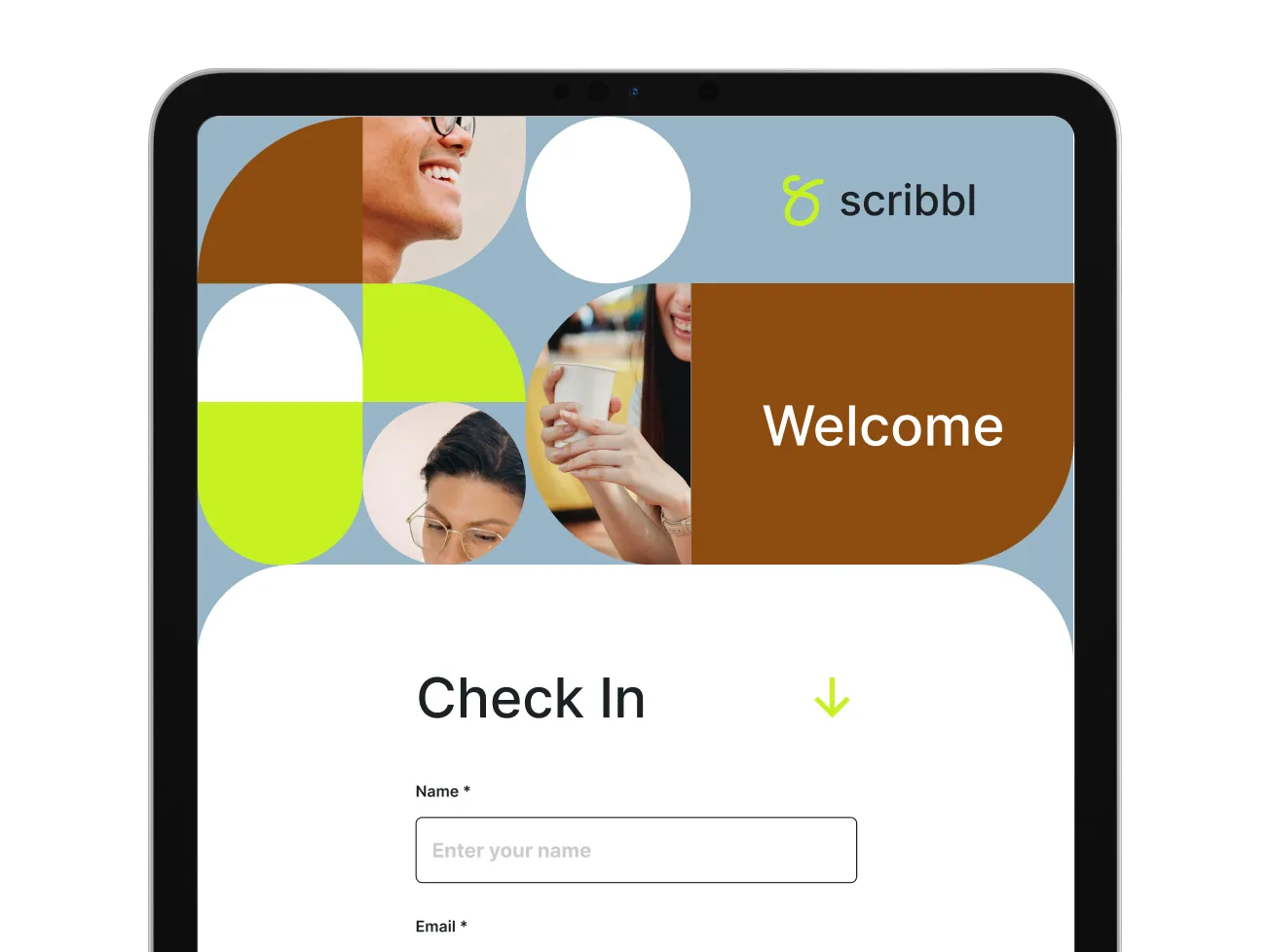
Splash is an event marketing platform covering branded event pages, registration, email marketing, check-in, and post-event analytics, with a strong emphasis on design quality.
Time to first live event: 30 to 45 minutes; the design tools are more sophisticated than simpler platforms.
Key Features:
- Fully brand-customizable registration pages with control over pricing, currency, availability, and order limits
- Native Stripe integration for tax rates, scheduled payouts, and dispute management
- Splash Host mobile app for fast QR-code check-in
- Salesforce and HubSpot integrations for marketing and pipeline attribution
- Ticket-sales analytics and reporting dashboard
Limitations:
- No mobile event app, a significant gap for conferences and multi-session events
- Higher cost than mid-market alternatives
- Not well suited for associations or nonprofits on limited budgets
Pricing: 1.6% + $0.49 per ticket, reduced to 1.25% + $0.49 on paid plans; monthly subscription pricing on request.
Best for: Enterprise marketing teams running brand events, product launches, and client-facing experiences where the registration page is itself a brand asset.
Not for: Internal events, nonprofit events, or any event where a design premium isn't justified by audience expectations.
Verdict: A solid choice for registration unless budget is limited or your focus is attendee networking, session management, or gamification, in which case Whova or Eventify is worth checking first.
9. EventsAir
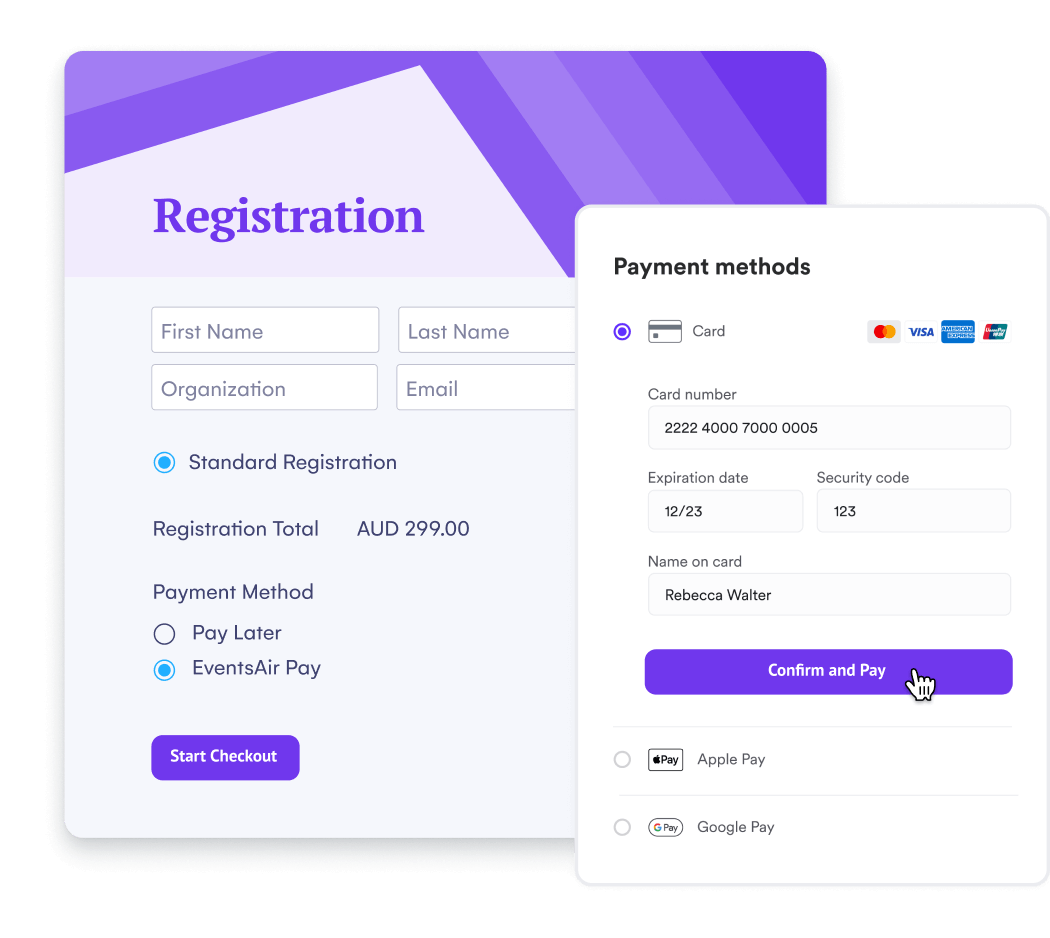
EventsAir manages the full event lifecycle, including registration, website building, abstract management, travel and accommodation booking, check-in, badge printing, and post-event reporting.
Time to first live event: 60+ minutes if you're opting into in-depth features during initial setup.
Key Features:
- Abstract management and speaker submission tools tied to registration
- Travel and accommodation booking built into the platform
- Multi-track sessions with complex pricing-tier support
- Partner network for onsite staffing and hardware
Limitations:
- The interface can feel overwhelming for first-time users
- Pricing is on request and typically enterprise-level
- Requires a consultation before you can access pricing
Pricing: Available on request, across three plans (Single, Multi, and Unlimited events).
Best for: Large conferences and trade shows with 500+ attendees where registration, abstract management, and logistics all need to connect in one system.
Not for: Small to mid-size events or teams that need simple registration without full event lifecycle management.
Verdict: An all-in-one platform for large conferences with complex logistics like multi-track sessions, travel management, and abstract submissions, but not the ideal choice if you just need simpler registration.
10. RSVPify

RSVPify is an event website builder and registration form with guided onboarding, invite list management, drip email communications, and sub-event management.
Time to first live event: Under 15 minutes, with a guided setup experience.
Key Features:
- Open or invite-only exclusive registration links, depending on event privacy needs
- Fully customizable event website or landing page builder
- Automated confirmation, reminder, and drip email sequences
- Sub-event and multi-session management with guest-list tracking
- Guided, beginner-friendly setup dashboard
Limitations:
- All plans except Enterprise include third-party offers in confirmation emails
- This is how RSVPify keeps fees low, but it's a real issue for professional events
- The interface doesn't always make clear what is and isn't included in emails
Pricing: 1.95% + $0.90 per ticket for paid events; a free plan for up to 100 guests; Starter from $39/month for free events; Enterprise is required to remove third-party ads from confirmations.
Best for: First-time event planners running small to mid-size events who need a guided setup experience and low ticket fees.
Not for: Professional events where third-party ads in confirmation emails would undermine brand credibility.
Verdict: The most guided setup experience for first-time event planners who need clear, step-by-step onboarding, though not ideal for professional events where complexity and brand credibility matter more.
11. Eventleaf
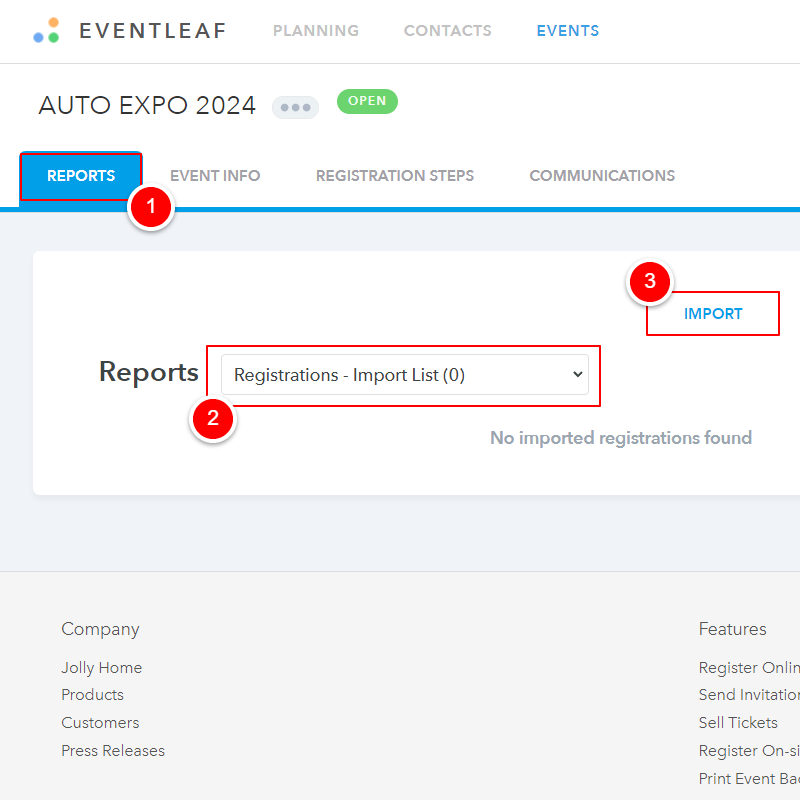
Eventleaf covers event registration, check-in, and badge printing, with the most comprehensive badge customization on this list, including templates, variables, QR codes, branding, and mobile management.
Time to first live event: Under 20 minutes; the setup is straightforward with clear navigation.
Key Features:
- Best-in-class badge customization with built-in templates, QR codes, and branding
- Restricted or invite-only registration, with optional manual approval
- Registration categories and groups for workshops, fee tiers, and packages
- Waitlist management with automatic notification when a spot opens
- Flexible API for custom workflows; free plan for up to 100 registrations/year
Limitations:
- A shorter feature list than full event management platforms
- Eventleaf's own credit card processing charges 6% per transaction, significantly higher than third-party processors
- Limited engagement and networking tools
Pricing: A free plan covers up to 100 registrations/year; Basic is $1/attendee, Professional is $2/attendee; third-party processors (PayPal, Stripe, Authorize.net) charge 3% per transaction.
Best for: Events where professional badge design and fast check-in are the primary operational priorities.
Not for: Events requiring community features, virtual components, or advanced attendee engagement beyond check-in.
Verdict: The strongest badge printing and check-in experience of any platform here. Great if badge quality and check-in speed are the priority, less so when community and engagement features matter more.
12. Ticketbud
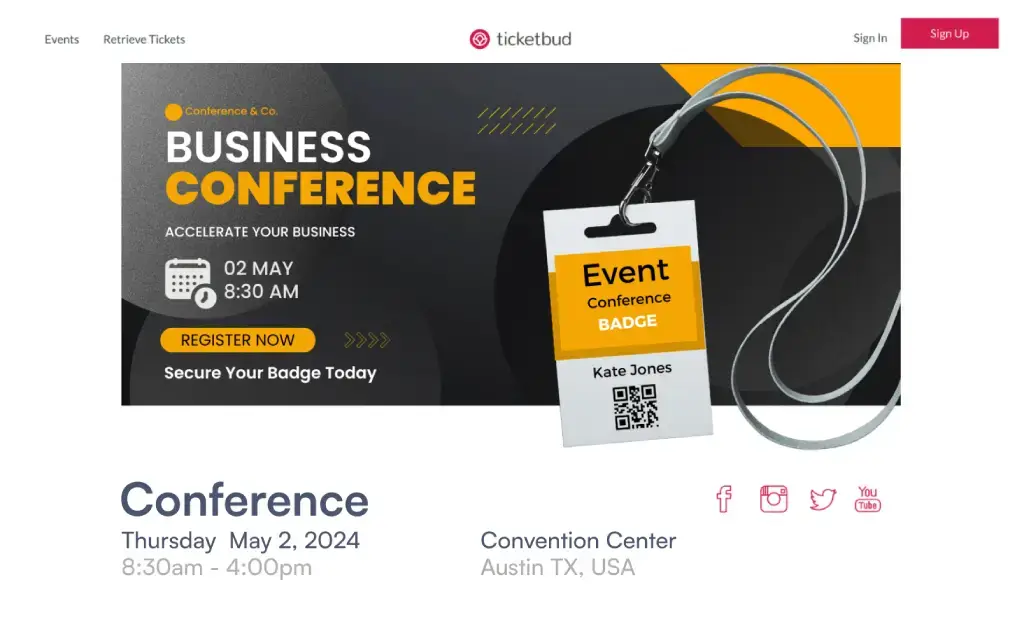
Ticketbud handles event ticketing and registration with a user-friendly interface designed for rapid setup, including season passes, group tickets, and discount codes.
Time to first live event: Under 10 minutes, thanks to its easy-to-use interface.
Key Features:
- Season passes and multi-ticket group sales
- Discount code creation and management
- Fast, no-code setup built for non-technical organizers
- Real-time sales tracking dashboard
Limitations:
- The highest combined fee of the ticketing platforms on this list (2% + $0.99 + 2.9% + $0.30)
- Not suitable for large professional conferences
- Lacks advanced management features
Pricing: 2% + $0.99 per ticket, plus 2.9% + $0.30 payment processing, roughly $26.15 in fees on a $500 ticket.
Best for: Festivals, parties, tours, and sports season pass sales where quick setup and simple ticketing are priorities.
Not for: Corporate events, conferences, or any event requiring advanced attendee management, badge printing, or analytics.
Verdict: A simple, affordable ticketing platform for casual and entertainment events, ideal for festivals and sports events where setup speed matters more than management depth. Not recommended for professional conferences or corporate events.
13. Brushfire
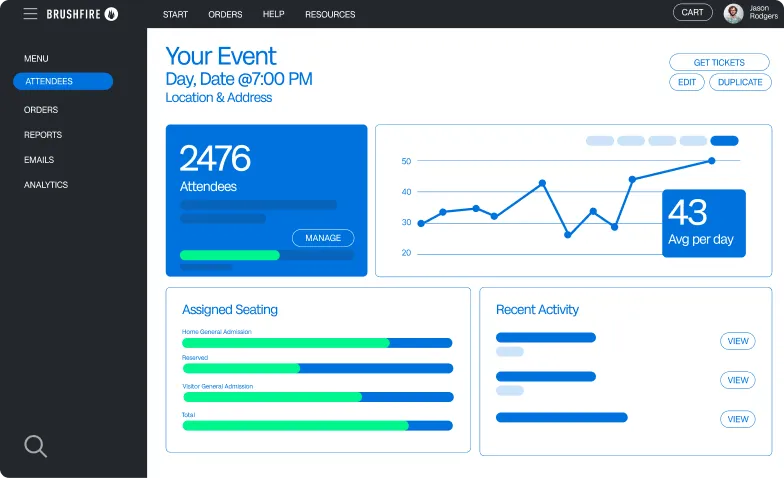
Brushfire offers highly customizable event pages, ticketing, confirmation emails, and reporting designed specifically for church-related events and religious gatherings.
Time to first live event: Under 20 minutes, ideal for organizers without technical backgrounds.
Key Features:
- Highly customizable event pages suited to community and religious events
- Tailored, automated confirmation emails
- Detailed post-event reporting
- Simple setup with no technical experience required
Limitations:
- Not suitable for large-scale professional conferences or corporate events
- Its specialized focus limits utility for non-religious event types
- Charges a fee even on free tickets ($1 per free ticket)
Pricing: $1.50 + 1% per paid ticket; $1 per free ticket.
Best for: Churches and religious organizations running community events, services, and gatherings.
Not for: Any event outside the religious community sector.
Verdict: The most purpose-built platform for church and religious community events, with customizable registration and community-appropriate design, but the wrong choice for any event outside this sector.
14. RainFocus
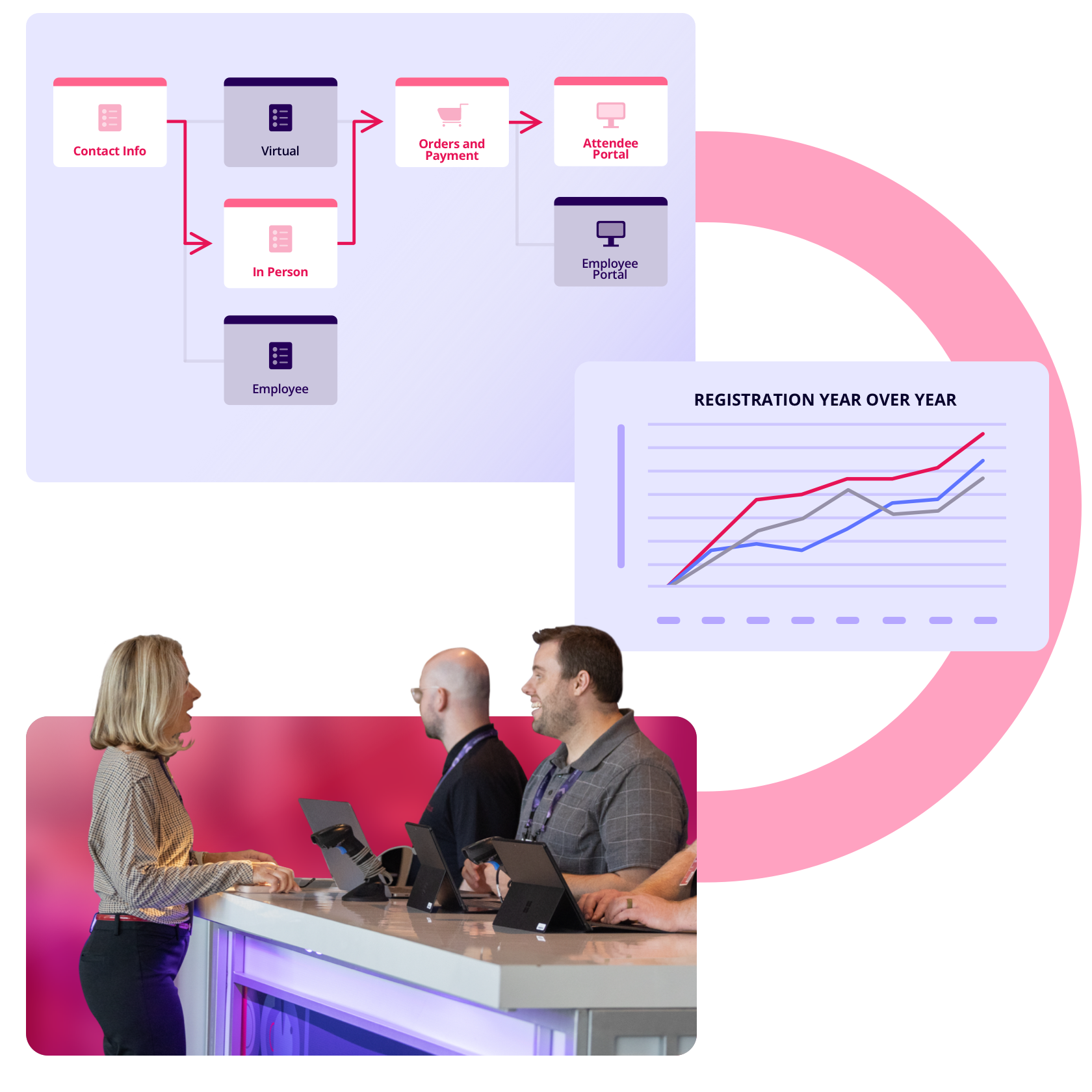
RainFocus covers event registration, content management, exhibitor activation, virtual event delivery, and advanced analytics, with personalized marketing campaigns driven by registration data.
Time to first live event: 60+ minutes, since it needs configuration to make the most of the analytics capability.
Key Features:
- Advanced reporting dashboard combining registration, content, and exhibitor data
- Personalized marketing campaigns driven by registration data
- Enterprise-grade audience segmentation and attribution
- Content management and virtual event delivery tools
Limitations:
- The interface is described as not user-friendly in multiple independent reviews
- A steep learning curve
- Perceived poor value for price by some reviewers, and limited review volume on public platforms
Pricing: Available on request, positioned at the enterprise market.
Best for: Enterprise event teams where detailed marketing attribution and data-driven audience targeting are primary event marketing goals.
Not for: Teams that need a simple, fast registration platform; RainFocus's analytics depth adds complexity that straightforward events don't justify.
Verdict: The strongest analytics and marketing intelligence platform on this list for event teams whose primary goal is measuring and improving event marketing performance.
15. Google Forms
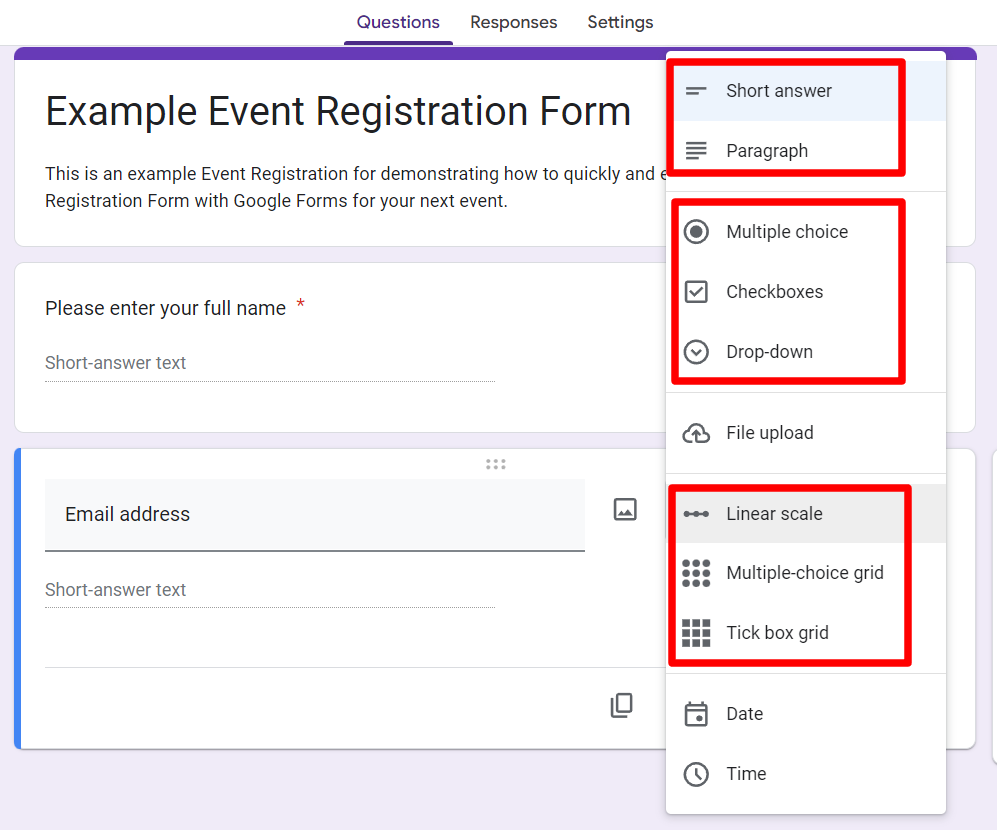
Google Forms creates customizable online forms for event RSVPs, information gathering, and waitlist management, integrating with Google Sheets for data storage.
Time to first live event: Under 5 minutes, the fastest setup on this list.
Key Features:
- Completely free, unlimited form creation
- Native integration with Google Sheets and Workspace
- Fastest setup of any tool
- Simple RSVP and waitlist collection, no payment processing
Limitations:
- No payment processing
- No check-in, badge printing, or attendee management
- Requires manual data management in Google Sheets, and no automated confirmations without additional tools
Pricing: Free.
Best for: Free community events, educational gatherings, or informal RSVPs where no payment or attendee management is required.
Not for: Any paid event, any event requiring check-in or badge printing, or any organization that needs attendee data to flow automatically into a CRM or marketing platform.
Verdict: The right tool for free events where data collection is the only requirement, but not ideal for any paid event or event requiring check-in, badge printing, or attendee management.
Which Event Registration Software Is Right for You? A Decision Guide
Use this guide to make the final call: the right registration software for events is the one that matches your event type, frequency, budget, and operational requirements.
Start With the Right Registration Platform, Then Everything Else Follows
Your event registration and management software determines the quality of every downstream workflow, from check-in to badge printing to post-event follow-up. If you're running more than a couple of paid events a year, start with Eventify for clean, structured attendee data and no per-ticket fees, then build the rest of your event stack from there.

Frequently Asked Questions
What is event registration software?
Event registration software, sometimes called event registration and payment software, manages the sign-up process for an event, including collecting attendee information, processing ticket payments, sending confirmations, and storing attendee data for later use in check-in, badge printing, or marketing.
What is the difference between event registration software and a form builder?
A form builder like Google Forms collects information but can't process payments, manage check-in, or print badges. Event registration software handles the full process, including payment, data storage, check-in, and often badge printing, in one connected system.
What is the best free event registration software?
Google Forms is one of the best free event registration platforms for simple data collection needs. For events that need a more polished registration page but still no cost, Jotform's free plan is a strong alternative.
Which event registration platform has the lowest fees?
Eventify charges no per-ticket fees at all, making it the lowest-cost option at scale. Among per-ticket platforms, RSVPify (1.95% + $0.90) and Brushfire (1% + $1.50) have some of the lowest published rates.
What is the best event registration software for conferences?
Whova is the strongest choice among conference registration platforms for single conferences that need a feature-rich attendee app and networking tools. Eventify is the better fit for associations running multiple conferences a year, since it avoids per-ticket fees.
What is the best event registration software for nonprofits?
Wild Apricot is purpose-built for nonprofits and membership organizations that need event registration tied to member records. Eventify is a strong alternative for nonprofits without a heavy membership component.
Does event registration software include check-in and badge printing?
Full event registration platforms like Eventify, Whova, Cvent, and Eventleaf include check-in and badge printing. Simple event registration websites built on form builders and most ticketing marketplaces do not include these features natively.
What is early payout in event registration software?
Early payout means a platform releases ticket revenue to the organizer before the event takes place, rather than holding funds until after the event concludes. This matters because events typically have costs like venue, catering, and staffing that need to be paid in advance.
How do I choose between Eventify and Whova?
Choose Eventify if you run multiple events a year and want to avoid per-ticket fees. Choose Whova if you're running a single large conference where attendee networking and community features are the top priority.
What is the best event registration app for mobile check-in?
Whova and Eventify both offer strong mobile check-in experiences connected directly to registration data. Eventleaf is the strongest choice specifically for badge printing paired with check-in. See our full roundup of the best event apps for more comparisons.
How much does event registration software cost?
Costs range from free (Google Forms) to enterprise pricing on request (Cvent, EventsAir, RainFocus). Mid-market platforms typically charge either a per-ticket fee of 1 to 4% plus a flat fee, or a flat monthly/annual subscription with no per-ticket charge.
What integrations should I look for in event registration software?
Look for native integrations with your CRM (Salesforce, HubSpot), email marketing platform, and payment processor, plus clean CSV export for anything not natively supported. Confirm what happens to attendee data after registration closes before committing to a platform.
.png)