Nederlands
 Deutsch
 Français
 Español
 Italiano
 Svenska
 Português (Brasil)
 Português (Portugal)
 العربية
 Türkçe
 Polski


Key Takeaways
To choose a good icebreaker, match it to your time, your group’s familiarity, the setting and your goal, then keep it short and optional. The 66 games below cover meetings, workshops, conferences and online sessions, with the ideal group size, materials and steps for each.
Picking the wrong icebreaker costs more than a few wasted minutes. A game that is too personal for a new team, too long for a 30-minute meeting or impossible to run on video can leave people more guarded than before you started.
Below you’ll find a quick-reference summary, a picker that matches common situations to games, a five-factor guide to choosing, 66 games in seven groups, tips for running them well, the most common mistakes and answers to frequently asked questions.
Icebreaker in this Article: Facts at a Glance
| Fact | Detail |
|---|---|
| Number of games | 66, in seven groups |
| Typical length | Under 5 minutes for quick openers; 10 to 30 minutes for get-to-know-you and team-building games |
| Smallest group | 3 people |
| Largest group | 5,000 people (Live Poll Opener, Matchmaking Meetups, Attendee Challenge Quest) |
| Materials | Most need none, or basic items such as paper, pens and a timer; a few use a polling or event app |
| Settings covered | In person, virtual and hybrid |
Note: Group sizes and timings are guidelines. Adjust them to your audience, your room and the time you have.
What is an icebreaker?
An icebreaker is a short, structured activity at the start of a session that helps people relax, connect and focus. It usually does one of three jobs: it gets people talking, it helps them switch from whatever they were doing before, or it introduces the topic of the session.
Icebreakers are not a waste of time when they are chosen well. They are a way to build the psychological safety that makes people willing to share ideas, ask questions and disagree openly later in the session.
Why use icebreakers?
Icebreakers help most when people don’t know each other yet, arrive distracted or are about to work on something creative. They give everyone an early, low-risk chance to speak, and speaking once makes it easier to speak again.
They also have trade-offs. A badly chosen game wastes time, feels forced and can make people self-conscious. If a team works together every day and the agenda is packed, a 60-second check-in is usually enough, and sometimes it is better to skip the game altogether.
When in doubt, go short. A one-minute check-in that everyone enjoys beats a ten-minute game that half the room endures.
Quick picker: which icebreaker should you use?
Not sure where to start? Match your situation to the games below.
| If you need… | Try these games |
|---|---|
| A 2 to 3 minute opener for a regular meeting | One-Word Check-In, Weather Report, High and Low, Emoji Check-In, Fist to Five, Question of the Day |
| A new team to get acquainted | Two Truths and a Lie, Common Ground, Speed Networking Rounds, Name and Gesture, Interview Your Neighbor |
| To wake up a low-energy room | Rock Paper Scissors Tournament, Zip Zap Zop, Mirror Me, Categories Rush |
| A remote or hybrid-friendly start | One-Word Check-In, Win of the Week, Chat Waterfall, Breakout Trios, Camera Scavenger Hunt, Whiteboard Doodle, Emoji Charades, Popcorn Round |
| A topic-focused workshop opener | How to Work With Me, Show and Tell, Postcards from the Future, Hopes and Fears Wall |
| To build trust and teamwork | Marshmallow Tower Challenge, Human Knot, Blindfold Maze, Back-to-Back Drawing, Desert Island Survival, Team Logo Sprint, Helium Stick, Story Chain, Office Scavenger Hunt |
| A conference or an audience of 100+ | Networking Bingo, Stand Up If…, Human Spectrum, Badge Questions, Live Poll Opener, Table Talk Cards, Four Corners, Matchmaking Meetups, Attendee Challenge Quest, Hopes and Fears Wall |
| A gentle start for a serious or sensitive session | Leave It at the Door, Win of the Week, Fist to Five, Appreciation Round |
Pick one main game and one backup before you start. If the first one doesn’t suit the room, you can switch without losing momentum.
How to choose the right icebreaker
Choose by five factors: time, familiarity, setting, group size and goal. Work through them in order and you will usually be left with two or three good options.
Time available
Match the game to the session, not the other way round. As a rule of thumb:
| Session length | Icebreaker length | Good picks |
|---|---|---|
| Stand-up or 30-minute meeting | 1 to 2 minutes | One-Word Check-In, Fist to Five |
| 1-hour meeting | 3 to 5 minutes | High and Low, This or That |
| Half-day workshop | 10 to 15 minutes | Common Ground, Speed Networking Rounds |
| Full-day or multi-day event | 15 to 30 minutes, plus short energizers | Marshmallow Tower Challenge, Silent Line-Up |
Say how long the game will take before you start, and stick to it. People relax when they know the end is in sight.
How well people know each other
Strangers need low-pressure games where sharing is light and optional, such as This or That or Common Ground. Colleagues who already know each other can handle deeper prompts like Three Dates or How to Work With Me. A mixed group, such as new joiners alongside long-time staff, needs games where everyone starts on equal footing.
Using a personal game too early. Disclosure should rise gradually across a session, or across several sessions, not in the first two minutes.
Setting: in person, online or hybrid
In a room, you can use movement, props and space. Online, stick to chat, breakout rooms, reactions and shared whiteboards. In hybrid sessions, choose games that work for both groups at once, such as Chat Waterfall or Live Poll Opener, so remote participants are never watching from the sidelines.
In hybrid meetings, let remote participants speak first. It signals that they are equal participants.
Group size
Under 15 people, you can go around the whole group. Between 15 and 50, use pairs, trios or table groups so everyone talks at once. Above 50, use simultaneous formats such as polls, standing statements or bingo. Going around a large room one person at a time turns an icebreaker into a queue.
Your goal
Decide what you want the icebreaker to achieve, then match it to a type of game:
| If your goal is to… | Choose | Example games |
|---|---|---|
| Get people talking | Quick icebreakers | One-Word Check-In, This or That |
| Help people connect | Get-to-know-you games | Two Truths and a Lie, Interview Your Neighbor |
| Raise energy | Fun icebreakers and energizers | Zip Zap Zop, Categories Rush |
| Build collaboration | Team-building games | Marshmallow Tower Challenge, Back-to-Back Drawing |
| Open a topic or set a vision | Small-group games | Postcards from the Future, Build a Metaphor |
| Connect a large audience | Large-group and conference games | Networking Bingo, Live Poll Opener |
| Include remote participants | Virtual and hybrid games | Chat Waterfall, Breakout Trios |
Expert tips for choosing
- Start with the lowest-risk option. If you don’t know the group, pick a game people can answer without revealing much. You can go deeper next time.
- Tie it to the agenda. An icebreaker that previews the topic, such as Postcards from the Future before a planning session, feels purposeful, so skeptics join in.
- Consider the time of day and energy level. A calm check-in suits an early Monday meeting, and a movement game suits the post-lunch slump.
- Think about culture and hierarchy. In groups where people defer to seniors, anonymous or written formats such as Whose Story Is It? or Chat Waterfall get more honest answers than going around the room.
- Always have a backup. A game that works with 10 people can flop with 40. Keep a shorter or simpler alternative ready.
Quick icebreakers for meetings (5 minutes or less)
These are for tight agendas. Each takes a few minutes, needs almost no preparation and suits regular team meetings.
Rotate the order people speak in each week, so the same person doesn't always go first or last.
1. One-Word Check-In
Everyone answers a question with a single word. It takes seconds, yet it shows the mood of the room straight away.
Why it works: Short answers remove the fear of saying the wrong thing, and speaking once early makes it easier to speak again later.
- Ask one question, such as "In one word, how are you arriving today?"
- Go around the group. Each person gives one word and no explanation.
- Name any pattern you notice ("a lot of 'busy' today") and adjust the pace of the meeting if needed.
Ask how people are arriving, not how they are. It invites an honest answer without sounding like therapy.
2. Weather Report
Participants describe their mood as a weather forecast. The metaphor makes honest answers feel safe and light.
Why it works: A metaphor lets people share stress or excitement without feeling exposed.
- Ask each person to describe how they feel about the weather, for example "sunny with a chance of deadlines."
- Keep it to one sentence each.
- Thank each person, then move on. Quietly note any "storms" to follow up on later.
Letting people explain at length. One sentence each keeps the metaphor light and the meeting on time.
3. High and Low
Each person shares one good and one tough thing from the past week. It balances celebration with honesty in under five minutes.
Why it works: Hearing a colleague admit a low point makes it normal to be human at work, which builds trust.
- Explain the format: one high, one low, one sentence each.
- Go first to show the right level of openness.
- Let people pass on the low if they prefer not to share it.
Rotate who goes first each week. When someone shares a real low, reply with thanks, not advice.
4. Leave It at the Door
Participants write down what is distracting them, then set it aside for the length of the meeting. It is a simple way to clear mental clutter.
Why it works: Putting a worry on paper can help people stop rehearsing it, which frees up attention for the session.
- Ask everyone to write down one thing on their mind.
- Have them fold it and place it face down, or put it in a "parking lot" pile.
- Tell them they can pick it back up after the meeting.
Let people keep their paper private. Collecting and reading the notes aloud defeats the purpose.
5. Win of the Week
Everyone shares a recent win, big or small. It starts the meeting on a positive note and shows the team's progress.
Why it works: Recognition lifts mood and reminds people their work is noticed.
- Give people 30 seconds to think of a win.
- Each person shares one.
- The group responds with applause or an emoji before the next person speaks.
Mention the prompt in the meeting invite so quieter members can prepare a win instead of thinking on the spot.
6. This or That
Quick either/or choices, such as coffee or tea or mountains or beach, get people reacting within seconds. There is no prep and plenty of laughter.
Why it works: Easy choices lower the barrier to taking part and reveal small things people have in common.
- Prepare five or six pairs of options.
- Read one pair. People choose by moving to a side of the room, raising a hand or reacting in chat.
- Ask one or two people to explain their pick, then move to the next pair.
Mix in a few work-related pairs, such as email or call, plan or improvise, to steer the conversation toward how the team works.
7. Emoji Check-In
Participants pick one emoji that sums up their mood. It is especially good in virtual rooms.
Why it works: Visual shorthand is fast and feels less formal than describing feelings in words.
- Ask everyone to post one emoji that matches their mood.
- Invite two or three volunteers to explain theirs.
- Acknowledge the overall mood of the room before you start.
Reading too much into one emoji. Treat it as a prompt to ask, not a diagnosis.
8. Fist to Five
Everyone shows, with one hand, how ready or energized they feel on a scale from zero (a fist) to five (an open hand). It is a silent, fast read of the room.
Why it works: A silent signal lets quieter people take part and gives the facilitator instant information.
- Ask a question, such as "How energized do you feel right now?"
- On the count of three, everyone shows their fingers.
- If most numbers are low, shorten the agenda or add a break.
Reuse the same scale later in the session, for example "How confident are you in this plan?"
9. Question of the Day
Put one light question on the first slide and let people answer as they join. It fills the awkward minutes before a meeting starts.
Why it works: Arriving participants have something to do, so silence does not build.
- Post a question such as "What was the best meal you ate this month?"
- Let people answer in chat or aloud as they arrive.
- Read two or three answers to open the meeting.
Keep a bank of about 20 fun but safe questions. Avoid anything about family, money or religion.
10. Headline of the Week
Each person writes a news headline for their week. It brings humor and creativity to a status check.
Why it works: Writing a headline forces people to summarize their week and add personality at the same time.
- Give everyone 60 seconds.
- Each person writes a headline, for example "Local Marketer Survives Third Rewrite."
- Read them aloud one by one.
Vote on the best headline. A round of applause or a small prize keeps it light.
Icebreakers to get to know each other
Use these when people are new to one another or work in different teams. They usually take 10 to 20 minutes but build deeper connections.
Offer a choice of two or three prompts, such as a hobby, a favorite meal or a place you'd like to visit, so people can share at the depth they are comfortable with.
11. Two Truths and a Lie
Each person shares three statements about themselves: two true and one false. The group guesses the lie.
Why it works: People learn surprising facts about each other, and the guessing keeps everyone engaged.
- Model your own three statements first, and ask for work-appropriate ones.
- In small groups, each person shares theirs.
- The group votes on the lie, then the speaker reveals it and tells the story behind a true one.
Allowing statements that are too personal or risky. Set a simple guideline up front: work-appropriate and nothing that could embarrass anyone.
12. Common Ground
Small groups race to find things they all share beyond work. It turns strangers into teammates by finding quick connections.
Why it works: Discovering similarities builds rapport fast, and the group works toward a shared goal.
- Divide people into groups.
- Give them four minutes to list as many things in common as possible. Obvious ones like "we all work here" do not count.
- Each group shares its most surprising item.
Add a twist: each group must find something in common that no other group has listed. It pushes people past "we all like coffee."
13. People Bingo
Each person gets a bingo card of traits and must find colleagues who match them. It forces mingling.
Why it works: A concrete goal gives people a reason to start conversations with someone new.
- Fill the squares with traits such as "speaks three languages" or "has run a race."
- Participants circulate and collect one signature per square, with each colleague signing only once.
- The first to complete a line shouts "bingo." Then ask what surprised people.
Tailor the squares to your group, such as "has presented at a conference," so the card doubles as an introduction to the team's experience.
14. What's in Your Bag
Participants show one item from their pocket or bag and say why it is there. Everyday objects reveal personality.
Why it works: A real object gives people something concrete to talk about, which is easier than describing themselves in the abstract.
- Ask each person to choose one item from their bag or pocket.
- Each explains it in 30 seconds.
- Invite the group to ask one follow-up question per person.
Make showing the item optional. People can describe it instead if they'd rather not open their bag.
15. Speed Networking Rounds
People pair up for short conversations and rotate every few minutes. Everyone meets several colleagues quickly.
Why it works: Short time limits keep energy high and remove the pressure to sustain a long conversation.
- Pair people up, either in two facing lines or in random pairs.
- Give a question and three minutes to discuss it.
- Ring a bell and rotate. Run three to five rounds.
Change the question each round, starting light and going a little deeper, such as from a hobby to something you are learning.
16. Name and Gesture
Each person says their name with a simple movement, and the group repeats both. It helps names stick.
Why it works: Combining movement with repetition aids memory, and the silliness relaxes the room.
- Stand in a circle.
- The first person says their name and makes a gesture. Everyone repeats both.
- Continue around the circle. At the end, try to recall as many names and gestures as possible.
Making big gestures compulsory. Allow a small movement or a simple wave so nobody feels on show.
17. How to Work With Me
Participants share a few working preferences, such as how they like to get feedback or the best way to reach them. It is practical and personal at once.
Why it works: Clear expectations reduce friction and help new teams collaborate sooner.
- Offer prompts like "I do my best work when…" and "The best way to reach me is…"
- Give people three minutes to write their answers.
- Share in pairs or with the whole group.
Collect the answers in a shared document or team wiki so new joiners can read them later.
18. Three Dates
Each person names three dates that shaped them, and the group asks what happened. It is a quick route to real stories.
Why it works: Specific dates invite stories, and stories create connection far faster than job titles do.
- Ask each person to pick three dates that matter to them.
- They share the dates one at a time without explanation.
- The group asks "what happened?" and the speaker tells the story.
Ask for at least one happy date. It steers people away from difficult memories.
19. Interview Your Neighbor
Pairs interview each other, then introduce their partner to the group. People listen more closely when they have to report back.
Why it works: Knowing you will introduce someone else builds attention and empathy.
- Pair people up and give each person three minutes to interview their partner.
- Suggest questions such as "What are you working on?" and "What do you do outside work?"
- Each person introduces their partner in 30 seconds.
Give each interviewer a short list of three questions so pairs don't stall or drift into private topics.
20. Origin Map
Participants stand on an imaginary map of the room according to where they grew up. It shows the group's backgrounds at a glance.
Why it works: Moving makes it energetic, and neighbors on the map naturally start talking.
- Tell the group the room is a map and point out north, south, east and west.
- People move to the spot where they grew up.
- Neighbors chat for a minute, then a few volunteers share a memory of home.
Define "where you're from" loosely: where you were born, grew up or feel at home. That way nobody feels left out.
Fun icebreakers and energizers
Use these to wake up a tired room, break up a long session or lighten the mood. Most take five to ten minutes.
Demonstrate the rules with a volunteer for 20 seconds before you start. Most energizers fail because people aren't sure what to do.
21. Rock Paper Scissors Tournament
Pairs play rock paper scissors, and the loser becomes the winner's cheerleader. The cheering line grows until two finalists face a roaring crowd.
Why it works: Competition with no stakes is energizing, and the growing cheer squad gets everyone involved.
- Everyone pairs up and plays one round.
- The loser joins the line behind the winner and chants their name.
- Winners find new opponents. Repeat until two finalists remain, with the whole room cheering.
Have winners announce "I'm the champion!" loudly. Noise is what makes this game work.
22. Silent Line-Up
The group lines up in order, such as by birthday, without speaking. It forces creative nonverbal communication.
Why it works: Removing speech makes people invent new ways to cooperate, and it usually triggers laughter.
- Give a criterion, such as birth month and day.
- No talking. People may only use gestures and mime.
- When they finish, each person says their position. Check accuracy and ask what strategies worked.
Avoid criteria people may not want to reveal, such as age or height. Birth month or first name alphabetically works well.
23. Drawing Relay
Teams take turns drawing a word while their teammates guess. It is quick, silly and competitive.
Why it works: Poor drawing skills level the field and make mistakes funny, so nobody feels judged.
- Split into teams, each with a board and a marker.
- One drawer from each team sees a word and draws it. No letters and no talking.
- Teammates guess. The first correct answer scores a point, then the next person draws.
Choose words from your industry so the game doubles as vocabulary practice.
24. Charades Sprint
Teams act out words or phrases in 60-second rounds. It gets everyone moving and laughing.
Why it works: Acting without words depends on shared understanding, which builds energy and quick cooperation.
- Fill a bowl with themed prompts, such as movies or office life.
- One person acts for 60 seconds while teammates guess.
- Count points and rotate the actor.
Give each person one "pass" card, so those who don't want to act can skip without fuss.
25. Zip Zap Zop
Players pass "zip," "zap" and "zop" around a circle using eye contact and pointing. Speed and focus are everything.
Why it works: It demands attention and fast reactions, which pulls minds away from phones and inboxes.
- Stand in a circle.
- One person points at another and says "zip." That person points at someone else and says "zap." The next says "zop," and the pattern repeats.
- Anyone who hesitates or says the wrong word does a playful forfeit, such as spinning once, and play continues faster.
Making the forfeit embarrassing. Keep it playful and quick, so nobody dreads making a mistake.
26. Mirror Me
Pairs mirror each other's movements as if looking in a mirror. It is calm, silly and builds focus.
Why it works: Matching a partner's movements takes full attention and builds quick nonverbal rapport.
- Pair up facing each other. One person leads and the other mirrors.
- The leader moves slowly for 60 seconds.
- Switch roles, then try again with no designated leader.
Play soft background music. It makes the slow movement feel less awkward.
27. Categories Rush
Teams race to list items in a category that start with a given letter. It is fast, loud and competitive.
Why it works: Time pressure sparks collaboration and pulls brains out of autopilot.
- Announce a category, such as animals, and a letter.
- Teams have 60 seconds to write as many words as they can.
- Score one point per unique word. Words that two teams both wrote score zero.
Choose categories tied to your session, such as "things on a project plan," for a gentle lead-in to the topic.
28. Imaginary Ball
Players toss an invisible ball that changes shape and weight each time. It rewards imagination and attention.
Why it works: Pretending together lowers inhibitions and reminds adults how to play.
- Stand in a circle.
- Mime throwing a ball and saying what it is, for example "a hot potato."
- The receiver catches it and reacts as if it were that object, then throws something new.
Model a few wild examples, such as a bowling ball or a sleeping cat, so the group sees that silly is welcome.
29. Hot Seat
One person sits with their back to a screen while teammates describe a word without saying it. It rewards clear, quick thinking.
Why it works: Describing without naming forces creativity and makes teammates listen closely to each other.
- A guesser sits with their back to the board.
- The team shows a word, and teammates give clues without saying it.
- Count correct guesses in 60 seconds, then rotate the guesser.
Mix easy and hard words so every team scores at least a few points.
Team-building icebreakers
These take more time, usually 15 to 30 minutes, but they give teams a shared experience to talk about afterward.
Leave three to five minutes for a debrief. The learning is in the conversation afterward, not in the build.
Treating these as pure fun and skipping the debrief.
30. Marshmallow Tower Challenge
Teams build the tallest freestanding structure using spaghetti, tape, string and a marshmallow. It is a classic lesson in planning versus prototyping.
Why it works: Teams must plan, test and adapt under time pressure, which exposes how they really collaborate.
- Give each team the materials and 18 minutes.
- The marshmallow must sit on top, and the tower must stand on its own.
- Measure the towers, then debrief: who led, how were decisions made, and what did teams change after a failed test?
Stay quiet while teams work and note who leads, who tests early and who waits. Those observations fuel the debrief.
31. Human Knot
Players hold hands with two different people across a circle, then untangle themselves without letting go.
Why it works: Solving a problem while physically connected builds communication and patience.
- Stand shoulder to shoulder in a circle.
- Reach across and take the hands of two different people.
- Untangle into a circle without releasing hands. Anyone who prefers not to touch can act as a coach and direct the group.
Stop at once if anyone is in pain, and always offer the coach role to people who prefer not to be touched or have mobility limits.
32. Blindfold Maze
One teammate guides a blindfolded partner through an obstacle course using words only. Trust and clarity decide the result.
Why it works: Giving and following precise instructions shows how clear communication builds trust.
- Set up an obstacle course.
- In pairs, one person is blindfolded and the other guides them verbally, with no touching.
- Switch roles, then discuss what made instructions helpful. Offer closed eyes instead of a blindfold for anyone uncomfortable.
Keep the course clear of hard or sharp objects, and have spotters nearby for safety.
33. Back-to-Back Drawing
One partner describes a picture while the other draws it without seeing it. It shows how easily instructions get misunderstood.
Why it works: It highlights the gap between what we say and what other people hear.
- Pairs sit back to back.
- The describer sees an image and explains it without naming the object. The drawer draws what they hear.
- Compare the drawings with the original and discuss which instructions helped most.
Run a second round where the drawer may ask questions, then compare results. It shows the value of two-way communication.
34. Desert Island Survival
Groups choose a few items from a list to survive on a desert island. The debate is the point.
Why it works: Making group decisions with limited resources reveals team dynamics and values.
- Give each group a list of items, such as a knife, a mirror, a rope and a lighter.
- They have 10 minutes to choose five and rank them.
- Groups present and justify their picks, then discuss how they reached agreement.
Add a rule that every person must speak before the group decides. It stops the loudest voices from taking over.
35. Team Logo Sprint
Teams create a name, slogan and logo in five minutes. Creativity meets a hard deadline.
Why it works: A shared identity bonds small groups quickly, and the time limit keeps it playful.
- Divide people into teams.
- Give them five minutes to create a name, a slogan and a logo.
- Teams present. Applaud each one or hand out fun awards such as most creative.
Keep the logos on display for the rest of the session, or post them in the team channel, to carry the energy forward.
36. Helium Stick
Teams try to lower a lightweight rod to the floor while everyone keeps their fingertips on it. Somehow it keeps rising instead.
Why it works: It shows how small coordination failures add up, and how teams succeed by slowing down and syncing.
- Two lines face each other with index fingers extended, the rod resting on top.
- The rule: every finger must stay in contact with the rod at all times.
- Lower the rod to the ground together, then discuss what changed when the team talked.
Giving up when the stick rises. Teams that slow down, count together and agree on a signal usually succeed.
37. Story Chain
The group builds a story one sentence at a time. It is quick, funny and requires careful listening.
Why it works: Building on other people's ideas is practice for collaborative work and the "yes, and" mindset.
- Start with an opening line, such as "Last Monday, the printer started talking."
- Each person adds one sentence that builds on the last.
- The final person wraps up the story. Optionally, write it down to share afterward.
Set a theme linked to your session, such as "the project nobody saw coming," to make the link-back easy.
38. Office Scavenger Hunt
Teams race to find or photograph items around the building or venue. It combines movement with teamwork.
Why it works: A shared mission and mixed teams build connections across departments.
- Create a list of 10 to 15 items or places.
- Teams have 15 minutes to find or photograph them.
- Award bonus points for creativity, then regroup to share the photos.
Mix teams across departments, and include items that require asking other people in the building for help.
Icebreakers for small groups (under 15 people)
Smaller groups can go deeper. These suit workshops, retreats and team sessions where there is time to listen.
In a small group, the leader's first answer sets the depth for everyone. Share something real but low-risk.
39. Silver Linings
Each person names a recent setback and finds something positive in it. It reframes challenges and encourages resilience.
Why it works: Looking for the upside builds a problem-solving mindset and shows that setbacks are something everyone shares.
- Ask each person to think of a minor recent setback.
- They describe it in a sentence.
- The group suggests one possible upside, or the person names it themselves.
Pushing people to find positives in serious setbacks. Keep it to small issues and let people pass.
40. Show and Tell
Participants bring or show an object that has meaning for them. It unlocks stories that job titles and CVs never reveal.
Why it works: Meaningful objects trigger real stories, which build connection and trust.
- Invite everyone to choose an object.
- Each person talks about it for 60 to 90 seconds.
- The group asks one follow-up question each.
Send the invite a few days ahead so people can choose an object, and keep to a strict 90 seconds each.
41. Life Map
Participants draw a simple map of key places and moments in their lives and share it. It is personal and visual.
Why it works: Drawing gives structure to storytelling, so shy people can share without improvising.
- Give everyone five minutes to draw.
- Ask them to include three to five important places or events.
- Each person shares their map in two minutes.
Tell people that stick figures and labels are fine. Drawing skill is not the point.
42. Whose Story Is It?
Everyone writes a true, surprising story about themselves on a slip of paper, and the group guesses who wrote each one.
Why it works: Anonymous sharing lets people reveal surprising facts without spotlight pressure, and guessing sparks curiosity.
- Each person writes a short, true, odd or funny story or fact without signing it.
- Collect the slips and read them aloud one at a time.
- The group guesses the author, who then adds the story behind it.
Skim the slips before reading them aloud, and set aside any that are too personal or could identify someone against their will.
43. Mystery Box
A box of random objects is passed around. Each person picks one and explains how it describes them or how it could solve a work problem.
Why it works: Random objects spark spontaneous creativity and take the pressure off describing yourself.
- Fill a box with a variety of small objects.
- Each person draws one without looking.
- They explain how it relates to them, the day's topic or a work challenge.
Include a few odd objects, such as a funnel or a spring. They prompt the most creative answers.
44. Build a Metaphor
Participants use building blocks to model their role, project or a challenge, then explain what they built. It makes abstract thinking visible.
Why it works: Building with their hands engages a different kind of thinking, and everyone gets an equal voice.
- Give each person a handful of blocks and a prompt, such as "Build how you see your role."
- Allow three minutes to build.
- Each person explains their model in one minute.
Ask "What does your model show about…?" rather than "What is it?" to draw out insight.
45. Postcards from the Future
Participants write a postcard from a year ahead describing what the team or project achieved. It sets a positive, shared vision.
Why it works: Imagining success makes goals concrete and shows what each person cares about most.
- Ask everyone to imagine it is a year from now.
- Each person writes a short postcard, such as "Dear team, we did it. Here is what happened…"
- Share in pairs or with the whole group and collect the common themes.
Collect the postcards and revisit them at the end of the session or project. They make a useful check on progress.
46. Appreciation Round
Each person gives a specific thank-you to a colleague. It builds warmth and a culture of recognition.
Why it works: Specific praise strengthens relationships, and receiving it makes people feel valued.
- Give everyone a minute to think of a person they want to thank.
- Each person names who they are thanking and what for, as specifically as possible.
- The recipient simply says thank you, with no deflecting.
Accepting vague praise such as "she's great." Ask for a specific moment or action.
Icebreakers for large groups and conferences
At conferences, town halls and training days, the challenge is making a big room feel personal. These games scale to dozens or hundreds of people. Where a game mentions an event app, any comparable polling or networking tool will work the same way. If you run events on Eventify, features such as Live Polls, matchmaking and gamification can power several of these.
In a big room, give instructions once, on a slide, and use a clear signal such as a bell or a countdown to bring people back.
47. Networking Bingo
A bingo card with squares like "talk to a speaker" or "meet someone from another country." It gives shy attendees a reason to start a conversation.
Why it works: Clear goals and a game frame make networking feel less awkward.
- Create cards with 9 to 16 networking challenges.
- Attendees complete squares by meeting people (a signature, a scan or a photo).
- The first to complete a line or a full card wins a prize.
Include a square that requires speaking with a sponsor or speaker. It drives useful conversations and adds sponsor value.
48. Stand Up If…
The facilitator reads statements, and people stand if they apply. It is a fast, visual way to show common ground in a big room.
Why it works: Seeing how many others share your experience creates instant belonging.
- Prepare 8 to 10 statements, from light ("I traveled from another city to be here") to slightly deeper.
- Read each one. People who agree stand up.
- Invite everyone to look around, then sit, and comment on any interesting patterns.
Start with statements almost everyone qualifies for, so the first few get the whole room on its feet and comfortable.
49. Human Spectrum
Participants position themselves along a line between two extremes, such as early bird and night owl. It starts conversations by showing the range of views.
Why it works: Physical positioning is a no-words way to share opinions, and neighbors naturally discuss why they stand where they do.
- Mark the two ends of the line.
- Read a question, and participants move to the spot that matches their view.
- Neighbors talk for 30 seconds, then a few people share.
Use light topics first, and save opinion-based ones for audiences who already know each other.
50. Badge Questions
Attendees add a conversation starter to their name badge, such as "Ask me about…" It gives people an easy opening line.
Why it works: A ready-made topic lowers the effort of starting a conversation and makes people approachable.
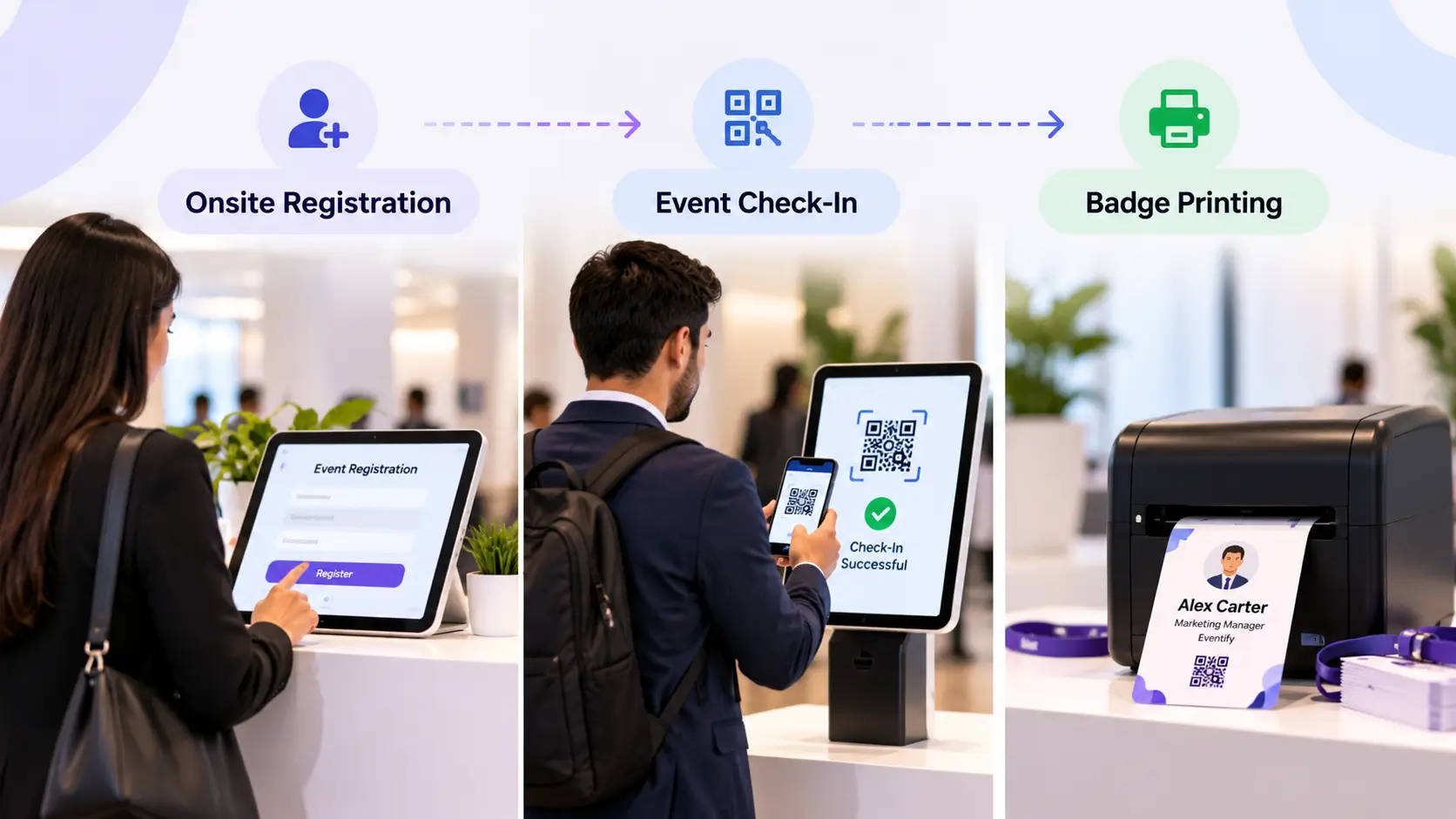
- At check-in, hand out stickers or small cards.
- Attendees write their topic on it and attach it to their badge.
- At the start, ask everyone to find three people and ask about their badge.
Put example prompts on a poster, such as "Ask me about my side project," so people don't stall in front of a blank sticker.
51. Live Poll Opener
Open with a live poll of two or three light questions on screen. The room sees itself in real time.
Why it works: Anonymous voting lets everyone take part at once, and the results give you instant talking points.
- Prepare two or three questions, such as "Is this your first conference?"
- Share the join code or link so attendees can vote.
- Show the results and comment on what they reveal.
Keep it to three questions at most and show the results immediately. Delayed results lose the room.
52. Table Talk Cards
Each table gets a card with a question for guests to discuss with their neighbors. It turns seating into conversation.
Why it works: A prepared prompt removes the silence that often settles over a new table.
- Put one card on each table.
- Give each table five minutes to discuss.
- Ask a few tables to share what they learned.
Print a different question on each table, so the report-back at the end has variety.
53. Four Corners
Each corner of the room represents a choice. Participants move to the corner that fits them and discuss.
Why it works: Movement raises energy and groups people with similar preferences, which makes conversation easy.
- Label the corners, for example Mountains, Beach, City and Countryside.
- Read the question and let people walk to their corner.
- Each corner discusses for two minutes and shares a one-line headline.
Offering choices with an obvious "right" answer. Pick neutral options so no corner feels like the losing side.
54. Matchmaking Meetups
Attendees are matched with others by interest or goal for short scheduled chats. It makes networking intentional instead of random.
Why it works: Matching removes the "who should I talk to?" barrier and leads to more relevant conversations.
- Collect interests or goals at registration.
- Match attendees and schedule 10-minute slots.
- Provide a conversation prompt and a timer, and invite attendees to share one takeaway afterward.
Send a short reminder before each slot with the match's name and a suggested opening question. It improves show-up rates.
55. Attendee Challenge Quest
Attendees earn points for completing actions such as visiting booths, asking questions and meeting new people. A leaderboard keeps momentum high.
Why it works: Points and visible progress motivate people to do things they would otherwise skip.
- Define 8 to 10 actions and the points each one earns.
- Attendees complete tasks through the app or a stamp card.
- Announce the leaderboard and award prizes at the end of the event or day.
Setting too many tasks. Mix a few easy ones with a few stretch ones, and pick a prize that suits your audience.
56. Hopes and Fears Wall
Attendees post one hope and one concern about the session on a wall. It surfaces expectations and shows people they are not alone.
Why it works: Naming hopes and concerns helps the facilitator tailor the content and makes worries feel normal.
- Give each person two sticky notes.
- They write one hope and one fear and post them on the wall.
- The facilitator groups the themes and addresses them in the session.
Respond to at least three of the notes during the session. People stop sharing if they never see anything come of it.
Virtual and hybrid icebreakers
Online, the biggest risks are silence and multitasking. These games use chat, breakout rooms and shared screens to keep people active. In hybrid meetings, give remote participants the first turn so they are not overlooked.
Put the instructions in the chat as well as saying them aloud, so latecomers and people with poor audio can follow.
57. Chat Waterfall
Everyone types an answer in the chat but waits to press enter until the host says go. The screen floods with responses at once.
Why it works: Everyone participates at the same time, and nobody is influenced by earlier answers.
- Ask a question, such as "What is your go-to comfort food?"
- Everyone types their answer but does not send it.
- On "go," everyone presses enter. Read out the most interesting answers.
Ask for short answers, such as one word or an emoji, so the chat stays readable when it floods.
58. Background Story
Participants explain their virtual or real background. It sparks easy conversation about places and tastes.
Why it works: Backgrounds are already visible, so there is an easy talking point with zero preparation.
- Ask everyone to choose a background that says something about them, or to explain the room they are in.
- Each person explains in 30 seconds.
- Others ask a follow-up question in the chat.
Making it obligatory. Some people work from shared or private spaces, so allow a blur or a neutral background.
59. Camera Scavenger Hunt
Participants have 60 seconds to find an object and show it on camera. A burst of movement wakes up remote teams.
Why it works: Getting out of the chair breaks the screen trance, and the race makes it fun.
- Call out a prompt, such as "something blue" or "something older than you."
- Everyone has 60 seconds to fetch an item.
- Show it on camera and explain it in one sentence. Repeat two or three times.
Choose items that are easy to find, such as something blue or something you use every day, so nobody has to show private belongings.
60. Breakout Trios
Small random breakout rooms of three discuss a prompt for five minutes. It is the online version of turning to your neighbor.
Why it works: Smaller groups make it easier to talk and give everyone airtime.
- Share a prompt on screen, such as "The best advice I ever received."
- Send people to rooms of three for five minutes.
- Bring everyone back and ask each room to share one highlight.
Put the prompt in the chat before you open the rooms, and keep a visible timer.
61. Favorite Photo Share
Each person shares a photo that makes them happy and explains why. It is personal without being intrusive.
Why it works: Photos tell stories quickly, and people enjoy sharing something they chose themselves.
- Ask participants to pick a photo in advance or during a short pause.
- Each person shares it and explains in 60 seconds.
- The group reacts in the chat.
Ask for a photo from the last year, so people don't spend the break searching through years of pictures.
62. Whiteboard Doodle
Everyone draws an answer on a shared digital whiteboard at the same time. The board fills with ideas and laughter.
Why it works: Doodling invites playfulness and levels out skill differences, and simultaneous input saves time.
- Share the board link.
- Give a prompt, such as "Draw your morning in 60 seconds."
- Everyone draws at once. Discuss a few of the drawings.
Show how to use the pen tool in 20 seconds first. Tool confusion is the main reason this game stalls.
63. Three-Minute Desk Tour
Participants show one item at their workspace and say why it is there. A peek at a colleague's space builds familiarity in remote teams.
Why it works: Seeing someone's environment makes remote colleagues feel more real.
- Ask each person to pick one item within reach.
- They show it and explain it in 30 to 45 seconds.
- Keep it optional. People can show a mug or a book rather than their whole space.
Keep this fully optional. Not everyone works from a space they want to show, so let people share a mug or a book instead.
64. Emoji Charades
One person posts a few emojis in the chat that represent a movie, song or phrase, and others guess. It is a good chat-based game.
Why it works: Puzzle solving gets people typing and pays off in laughter.
- The host or a volunteer posts emoji clues.
- Others type their guesses in the chat.
- The first correct guess earns a point and writes the next puzzle.
Prepare a few puzzles of your own to start, then hand the next one to whoever guesses first.
65. Song of the Week
Each person names a song that matches their mood or week, optionally building a shared playlist. Music reveals personality.
Why it works: Music is emotional and easy to talk about, and a shared playlist gives the team an ongoing ritual.
- Ask each person to name a song for their week.
- They say a few words about why.
- Add the songs to a shared playlist and play one at the start of the next meeting.
Set a simple rule, such as work-appropriate lyrics, and let people share just the title if they prefer.
66. Popcorn Round
The current speaker picks the next speaker by name, so there is no fixed order. It keeps remote participants alert.
Why it works: Not knowing who is next keeps everyone engaged and avoids the "who goes first?" pause.
- Ask a simple question.
- The first person answers, then names someone who has not spoken yet.
- Continue until everyone has answered. In hybrid meetings, make sure remote people get called on early.
Letting the same few people pass it among themselves. Remind each speaker to pick someone who hasn't spoken yet.
How to run an icebreaker well
A well-run icebreaker takes a few minutes of preparation and pays off for the whole session. Follow four stages: prepare, introduce, run and close. Then check that the game is inclusive.
Before the session
What to do:
- Choose the game using the five factors above, and read the steps through once.
- Test everything that can fail: polling links, breakout rooms, slides, markers and a working timer.
- Prepare your own answer so you can go first.
- Have a simpler backup ready.
Put the instructions on a single slide or in the chat. People forget spoken rules, and latecomers can catch up on their own.
Introduce it
What to do:
- Say why you are doing it in one sentence, such as "This helps us hear everyone's voice before we start."
- State the time limit and the one or two rules.
- Make it clear that passing is fine.
Skeptics join in when the purpose is clear and the stakes are low. Never apologize for the icebreaker. Presenting it with confidence makes it easier for the group to take part.
Run it
What to do:
- Go first, and set the tone and depth with your own answer.
- Keep time visibly, with a timer on screen or a bell.
- Watch the energy. If the game drags, wrap it up early. If it takes off, let it run an extra minute.
- If one person dominates, thank them and invite someone who hasn't spoken yet.
- In hybrid sessions, call on remote participants first and use chat or polls so they have the same voice as people in the room.
Give people ten seconds of thinking time before you ask for answers. Quiet participants often have good contributions but need the pause.
Close it
What to do:
- Thank people, then link the game to the session in one or two sentences, for example "Notice how much clearer we were once we asked questions."
- Move straight into the agenda while the energy is high.
The link-back is what separates an icebreaker from a time-filler. It shows the team why you spent the time.
Make it inclusive
What to do:
- Offer alternatives to games that need touch, movement, vision or speaking in front of a crowd.
- Avoid topics that assume everyone shares the same background, such as alcohol, religion, holidays, family structure or money.
- Allow people to answer in writing, and give non-native speakers extra time.
- Check that the venue and materials work for everyone, including wheelchair users and people with sensory sensitivities.
Common icebreaker mistakes to avoid
Most icebreakers fail for the same few reasons, and all of them are fixable. Check your plan against this list before you run it.
| Mistake | Why it backfires | Fix |
|---|---|---|
| Going too personal too soon | Questions about family, health, money, religion or relationships can make people uncomfortable and push them to withdraw. | Start with light, work-safe topics, and let the depth come from the group. |
| Running too long | If the icebreaker takes longer than the first agenda item, people feel their time is wasted. | Use a timer, and cut the game short at the first sign of dragging. |
| Forcing fun | Mandatory, performative enthusiasm backfires, especially with skeptical or senior groups. | Explain the purpose, make participation optional and keep your own tone relaxed. |
| Ignoring accessibility | Games that rely on touch, movement, vision, hearing, fast English or public speaking exclude people without anyone meaning to. | Offer a role or an alternative for every game, such as a coach in Human Knot or written answers instead of speaking. |
| Choosing a game that clashes with the context | A silly game before a difficult announcement, or a heavy one before a quick stand-up, sends mixed signals. | Match the tone of the icebreaker to the tone of the session. |
| Skipping the debrief | Without one, team-building games feel like games and nothing more. | Spend two to three minutes asking what happened and how it relates to your work. |
| Repeating the same game | Rituals are good, but the same format every week becomes background noise. | Rotate among three to five favorites and let the team suggest new ones. |
| Leaving remote participants out | In hybrid sessions, in-room games leave remote attendees watching. | Pick games that work through chat or polls, and call on remote people first. |
Stop any game immediately if someone appears uncomfortable, in pain or distressed. Thank them, offer an alternative role, and move on without drawing attention to it.
After each session, note which games got energy and which fell flat, and why. Over a few months you will build a short list of reliable favorites for each group size and setting.
Start Small, Then Build From There
A good icebreaker is short, optional and connected to what comes next. You do not need all 66. Pick two or three that fit your group size, time and setting, run them, and notice which ones get people talking. Keep a list of what works and rotate your favorites so the habit stays fresh.
If you run conferences, training days or large meetings, an event platform can make several of these games easier to run at scale. Tools like Eventify’s Live Polls, matchmaking and gamification features let you run polls, networking sessions and attendee challenges without paper, so your attendees spend less time waiting and more time connecting.
Disclosure: Eventify, the publisher of this guide, makes the event platform mentioned in games 51, 54 and 55. Those games work the same way with any comparable polling, matchmaking or gamification tool.
Frequently asked questions
What is a good icebreaker for a short meeting?
Try One-Word Check-In (1), Weather Report (2), High and Low (3), Emoji Check-In (7) or Fist to Five (8). Each takes under three minutes and needs no preparation.
How long should an icebreaker last?
Two to five minutes for regular team meetings, 10 to 20 minutes for workshops with new groups, and up to 30 minutes for team-building challenges. The longer the session, the more time an icebreaker can reasonably take.
What are good icebreakers for people who hate icebreakers?
Choose low-pressure, optional and purposeful formats, such as This or That (6), Fist to Five (8), Question of the Day (9) or Chat Waterfall (57). Explain the purpose, keep it short and let people pass.
What are the best virtual icebreakers?
Chat Waterfall (57), Breakout Trios (60), Camera Scavenger Hunt (59), Whiteboard Doodle (62) and Emoji Check-In (7) all work well online because they use tools people already have in the call.
How do you run an icebreaker with a large group?
Use formats where everyone takes part at the same time: live polls (51), standing statements (48), pairs and table discussions (52), or networking bingo (47). Avoid going around the room one person at a time.
Which icebreakers work best at the start of a workshop?
Pick one linked to your topic. Hopes and Fears Wall (56), Postcards from the Future (45), Build a Metaphor (44) and How to Work With Me (17) all set up the content that follows.