
By Natina Hill, ROOTED in Resistance
"We weren't just designing a conference for educators. We were designing an experience for human beings who needed joy, healing, community, and rest."
When I set out to create ROOTED in Resistance, I knew what I didn't want it to be.
I didn't want another conference where people sprinted from session to session, checked boxes, collected certificates, and left exhausted. I wanted something different: an intentional space for teachers of color working in independent schools across America, who needed joy, community, and purpose. Where people could actually breathe.
What I didn't expect was how much that vision would reshape every single decision I made as an event organizer, from how I built the schedule to how I thought about the app in attendees' hands.
This is what I learned. You can also read the full ROOTED in Resistance case study here.
Most Conference Schedules Are Accidentally Designed for Exhaustion
Nobody sits down and thinks: I'm going to drain my attendees. It just happens: session after session, back to back, with no room to breathe. And before long, attendees are quietly making impossible choices:
- Do I go to this session or that one?
- Do I network or eat?
- Do I take five minutes for myself or risk missing something important?
That constant pressure doesn't just tire people out. It makes the whole experience feel like something to survive rather than something to savor.
The moment I recognized this pattern, I couldn't unsee it. And it became the foundation for how we designed ROOTED in Resistance from the ground up.
Points for Planners
- Look at your draft schedule and ask honestly: where is the breathing room?
- If attendees have to choose between rest and content, consider adjusting your schedule
- Exhaustion is not engagement. Leave room for transitions or intentional breaks
More Content Is Not the Answer. More Freedom Is.
The instinct when planning an event is to pack it. More sessions, more speakers, more value. But here's what I've come to believe:
The best attendee experience isn't about adding more. It's about giving people the freedom to engage in ways that actually work for them.
For our attendees, teachers who pour themselves into their students every single day, that freedom was everything. They needed room to find community more than anything else. They also needed time to reconnect with themselves and heal. A schedule that didn't allow for that wasn't serving them, no matter how impressive the speaker lineup was.
Points for Planners
- Reframe "value" because it's not measured in sessions per hour
- Ask yourself what your specific attendees actually need from this experience
- Freedom within a schedule is a feature, not a gap to fill
We Did Something Most Organizers Wouldn't Consider: We Ran Sessions Twice
This was the decision that changed everything.
Instead of treating every session as a one-time, now-or-never event, we asked our presenters to facilitate their sessions twice. The same content, offered at two different points in the schedule.
The effect was immediate and visible:
- Attendees stopped agonizing over clashing sessions
- The anxiety of "what am I missing?" almost disappeared
- People could attend a wellness activity such as yoga, meditation, or a quiet moment, without sacrificing professional learning
- Conversations flowed more easily because nobody felt like they were racing somewhere
It sounds simple. It required more from our facilitators, and we were upfront about that. But the payoff in attendee experience was worth every conversation.
Points for Planners
- Repeated sessions are not a sign of limited content. Instead, they're a sign of thoughtful design
- Talk to your speakers early about the possibility of running sessions twice
- The sessions that feel most "unmissable" are usually the ones worth repeating
Wellness Belongs in the Schedule
At most conferences, wellness gets tucked into an early morning slot that barely anyone can make it to. It's technically there, but it's not really part of the experience.
At ROOTED in Resistance, wellness was central and offered throughout the day.
Attendees could attend yoga, meditation, or simply take unscheduled time for themselves without feeling like they were missing critical content. Because of how we structured the program, that choice was genuinely available to everyone.
Points for Planners
- Schedule wellness activities at reasonable times, not as an afterthought at 6am
- Make sure wellness options don't clash with the sessions people most want to attend
- Explicitly communicate that taking a break is encouraged
People Need Space to Actually Process What They're Learning
Here's something conference design rarely accounts for: reflection and processing time.
We absorb information. We move to the next session. We absorb more information. And at the end of three days, we have notebooks full of notes we may never fully integrate.
ROOTED in Resistance built in time for people to think, journal, and sit with what they were learning before rushing to the next thing. We allowed breathing room so reflection and processing was woven into the day and not simply scheduled as a reflection session.
Points for Planners
- Unscheduled time is not wasted time. It's processing time
- Consider explicitly naming "open time" in your program so attendees feel it's intentional
- The sessions that land hardest are often the ones followed by space to absorb them
The Most Meaningful Moments Happened Off the Stage
We planned the sessions. We could not plan what happened between them.
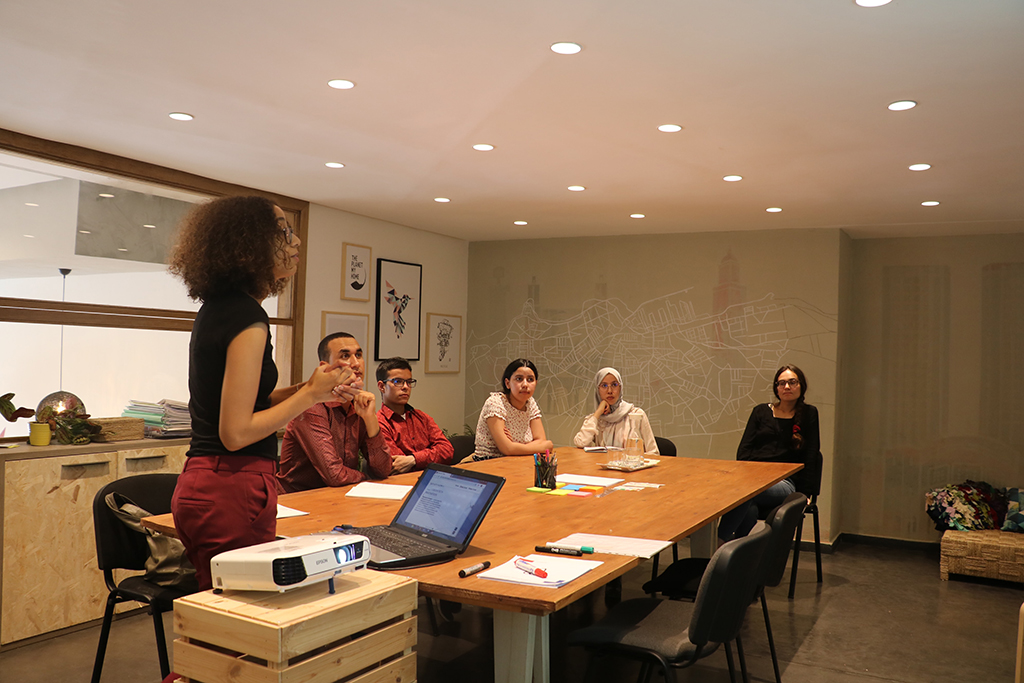
Some of the most powerful moments at ROOTED in Resistance had nothing to do with what was on the schedule; they happened in hallways, over coffee, during the kind of conversations that only happen when people finally feel like they're among their people.
That organic community doesn't happen by accident. It happens when you design a schedule that actually gives people time to talk.
Points for Planners
- Build transition time generously. Corridor conversations are part of your program
- Create informal spaces: a lounge area, a coffee station people naturally gather around
- Don't measure the success of your event only by what happened on stage
Emotional Safety Is Part of the Attendee Experience Too
This one is specific to ROOTED in Resistance, but I think it applies more broadly than people realize.
Our attendees are teachers of color working in predominantly white institutions. That context matters. They carry weight into this space that deserves to be acknowledged, not just professionally, but humanly.
We designed for that. We made room for attendees to support one another, to share experiences, to be seen in ways that their everyday working environments don't always allow.
Points for Planners
- Know who your attendees are beyond their job titles
- Think about what they're carrying when they walk through the door
- Emotional safety in your event design builds community
The Right Technology Makes Personalization Possible
None of this works without the right infrastructure behind it.
The Eventify app was what made personalized agendas a reality for our attendees. People could build schedules that reflected their individual needs, energy levels, and interests, not just what the program told them to attend.
- Someone who needed a slower morning could build that
- Someone who wanted to prioritize community over sessions could do that
- Someone who wanted to attend every session available could do that too
The app also handled session organization, room assignments, and waitlist management seamlessly, which meant that on event day, the team wasn't firefighting logistics. We were present.
A relevant data point alongside Natina's experience: in a 2026 industry survey by AMW Group, 56% of attendees named networking and connection as the hardest thing to get right at events, which lines up closely with what personalized, self-directed agendas are designed to solve.
Points for Planners
- Choose technology that gives attendees agency, not just information
- Personalized agendas are not a luxury feature. They're how you honor different attendee needs
- When your platform handles logistics, your team is free to be in community with your attendees
The Whole Point Was to Honor the Whole Person
Everything I've described (the repeated sessions, the wellness integration, the reflection time, the community, the emotional design) all comes back to one thing.
We weren't designing a conference. We were designing an experience for human beings.
Teachers who needed to learn, yes. But also teachers who needed joy. Who needed healing. Who needed to feel seen, supported, and sent back into their schools with something real.
That's the attendee experience detail that 90% of organizers overlook. Not the app. Not the schedule format. Not even the speaker lineup.
It's designing a human-centered experience. Remembering that your attendees are people first.
Read the full ROOTED in Resistance case study here.
Points for Planners: The Full List
| 1 | Design for how attendees will feel, not just what they will learn |
| 2 | Give people genuine freedom within the schedule |
| 3 | Consider running high-value sessions twice |
| 4 | Make wellness a real option, not a token gesture |
| 5 | Build in unscheduled time for reflection |
| 6 | Leave room for community to happen organically |
| 7 | Design for the emotional reality of your specific audience |
| 8 | Choose technology that enables personalization at scale |
| 9 | When logistics run themselves, your team can be present |
| 10 | Remember: design human-centered experiences |
.png)